No-Pull Harnesses Built for Elevators and Narrow Halls
Rabbitgoo’s No-Pull Dog Harness leads this apartment comparison, thanks to dual leash clips that stop a lunge before it reaches a shared hallway. PoyPet’s No Pull Harness suits small-breed chests better, with two independent straps. Ruffwear’s Front Range adds a padded top handle, useful for guiding a dog into a crowded elevator.
Rabbitgoo’s No-Pull Dog Harness suits apartment dwellers whose dog lunges at hallway noises, since front and back clips redirect that pull sideways before it reaches a neighbor’s door. Its buckles click loudly on the way out, which matters at night. Owners of small, narrow-chested dogs get a better fit from PoyPet’s independent neck and chest straps instead.
Hallways, elevators and shared stairwells strip away the room a suburban yard gives a lunging dog. We compared clip placement, adjustment range, padding thickness and buckle type across seven harnesses, then checked owner reports covering chafing, buckle noise and how each one handled a sudden pull toward another dog.
How to choose
What makes a harness apartment-friendly Narrow hallways and packed elevators leave almost no room to manage a dog that suddenly pulls. A front clip turns that pull sideways instead of letting it gain forward momentum. A top handle adds a second control point for squeezing past a neighbor or into a full elevator car.
Front clip vs back clip: which controls pulling better Front-clip designs discourage pulling by steering the dog back toward the handler, which suits dogs that react to hallway noises or passing neighbors. Back clips attach faster and suit dogs that rarely pull hard. Several harnesses in this comparison include both clips, so one harness can switch roles depending on the walk.
Getting the fit right for small apartment breeds Small breeds often need a neck strap and chest strap that adjust separately, since a single strap sized for the chest frequently leaves the neck loop too loose. Step-in styles skip pulling anything over a head that resists it. Check the listed minimum size before buying, since some harnesses bottom out above what a toy breed actually needs.
Buckle noise and hardware for shared walls Metal buckles click sharply when clipped or unclipped, noticeable at odd hours through thin apartment walls. Plastic side-release buckles run quieter but wear out faster under repeated strong pulls. Reflective trim helps in dim parking garages and stairwells, spots that hallway lighting rarely covers well.
Our top picks

Rabbitgoo No-Pull Dog Harness
Two leash clips give this harness dual-purpose control: the front chest ring turns a lunging dog sideways, while the back ring suits a calm, loose-leash stretch. Foam-backed mesh spreads pressure across the chest rather than the throat. Four separate adjustment points let it fit snugly across a wide range of chest shapes.
Pros
- Front clip interrupts a lunge before it builds momentum
- Foam mesh padding avoids throat and armpit rubbing
- Four adjustment points fit varied chest shapes without gaps
Cons
- Sits bulkier than a minimalist step-in design
- Metal buckles click audibly when clipped
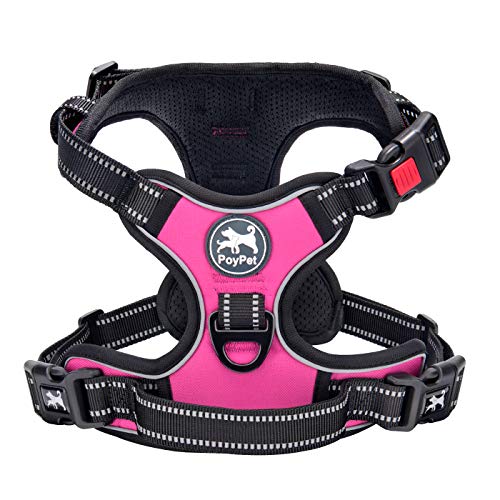
PoyPet No Pull Dog Harness
Neck and chest straps adjust separately here, which helps narrow-chested small breeds that slip loose from single-strap harnesses. Stepping into the harness skips the over-the-head fitting many small dogs resist. Reflective stitching along the straps catches headlights and hallway lighting after dark.
Pros
- Independent straps dial in a precise fit for narrow chests
- Step-in style avoids over-the-head fitting struggles
- Reflective stitching adds visibility in dim stairwells
Cons
- Size range stops short of large-breed chest measurements
- Getting a squirmy dog to step in takes patience

Ruffwear Front Range Harness
A padded handle across the back gives an immediate grip point for steering a dog into a crowded elevator or past a neighbor at the door. Foam panels at the chest and belly resist shifting during a wriggle or sudden turn. Four adjustment points keep the fit snug, though the handle itself adds some bulk.
Pros
- Top handle gives fast control near elevators and doorways
- Foam padding resists twisting during sudden movement
- Reflective trim helps visibility on evening walks
Cons
- Lacks a dedicated front clip for pulling correction
- Bulkier profile than slim step-in alternatives
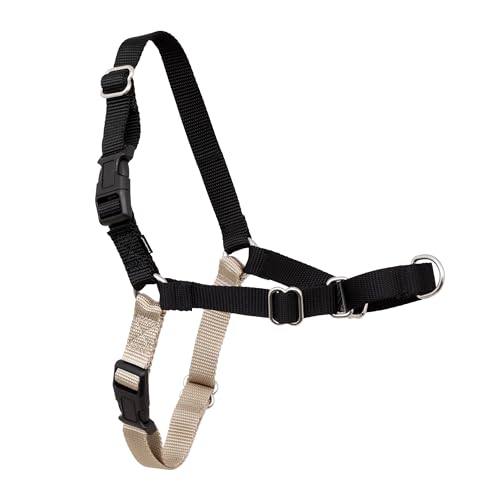
PetSafe Easy Walk No-Pull Harness
A single front clip does all the work here, steering a pulling dog back toward the handler rather than letting it surge ahead. That narrow focus keeps the build lighter than dual-clip options. The martingale-style loop tightens slightly under tension, something most dogs adapt to within a few walks.
Pros
- Lightweight build compared with dual-clip harnesses
- Front clip reliably discourages forward pulling
- Costs less than premium dual-clip alternatives
Cons
- No back clip option for calmer, relaxed walks
- Loop tightening takes some dogs longer to accept

Kurgo Tru-Fit Smart Harness
A reinforced loop on the back doubles as a seatbelt attachment, handy for apartment owners who drive to a dog park instead of walking there. Padded chest and belly straps add comfort across longer routes. Steel buckles feel sturdier than plastic hardware, at the cost of a bit more weight.
Pros
- Doubles as a secured seatbelt harness for car rides
- Steel hardware holds up better than plastic buckles
- Padded straps stay comfortable on longer routes
Cons
- Steel buckles add noticeable weight versus mesh designs
- Owners report sizing running slightly large

Voyager All Weather No-Pull Step-in Harness
Mesh construction keeps this step-in harness light for a quick trip down the hall to a courtyard. Neck and torso straps adjust to fit a range of builds without added hardware. No front clip means pulling correction depends mostly on how snugly it fits.
Pros
- Lightweight and fast to put on for short trips
- Mesh fabric breathes well in a warm hallway
- Costs less than most dual-clip harnesses
Cons
- No front clip limits pulling correction
- Padding is thinner than premium harnesses offer

Julius-K9 IDC Powerharness
Reinforced straps and a solid handle hold up under a hard lunge in a shared hallway, a build drawn from working-dog gear. A wide chest plate spreads pulling force instead of concentrating it on a thin strap. The tradeoff is a stiffer, less flexible fit than mesh harnesses provide.
Pros
- Reinforced construction withstands strong, sudden lunges
- Wide chest plate distributes pulling force evenly
- Solid handle gives quick control near doors
Cons
- Stiffer fit than mesh step-in harnesses
- Heavier than most calm dogs actually need
How they compare
| # | Model | Control points | Best for | Score | Price |
|---|---|---|---|---|---|
| 1 | Rabbitgoo No-Pull Dog Harness | Front and back leash clips | Best overall | 9.4 | Check price |
| 2 | PoyPet No Pull Dog Harness | Front and back leash clips | Best for small dogs | 9.1 | Check price |
| 3 | Ruffwear Front Range Harness | Back clip with front leash loop | Best for elevator buildings | 8.8 | Check price |
| 4 | PetSafe Easy Walk No-Pull Harness | Front clip only | Best for pulling correction | 8.5 | Check price |
| 5 | Kurgo Tru-Fit Smart Harness | Front and back clips | Best for car rides and walks | 8.2 | Check price |
| 6 | Voyager All Weather No-Pull Step-in Harness | Back clip only | Best value | 8.0 | Check price |
| 7 | Julius-K9 IDC Powerharness | Back clip with reinforced handle | Best for strong or reactive dogs | 8.6 | Check price |
Questions worth asking
What is the best type of dog harness for apartment living?
A front-clip or dual-clip no-pull design works well, since it gives control in narrow hallways and near elevators where a sudden lunge has nowhere safe to go.
Do no-pull harnesses really stop a dog from pulling?
They redirect the pull rather than erase it, turning the dog back toward the handler when it lunges forward. Leash training alongside the harness produces the strongest long-term results.
Is a front-clip harness better than a back-clip harness for small dogs?
Front clips give more control over pulling, though back-clip designs attach faster and stay comfortable for calm small breeds that rarely pull hard.
How do I measure my dog for a harness?
Wrap a tape measure around the widest part of the rib cage, just behind the front legs, then match that number to the brand’s size chart instead of guessing from weight.
Can I safely bring my dog into an elevator with a harness on?
Yes, and a harness with a top grab handle gives an extra point of control when guiding a dog into a crowded car or away from another rider’s dog.
Are step-in harnesses a good fit for apartment dogs?
Step-in designs go on quickly for short hallway trips and skip pulling a strap over the head, which suits dogs that resist that motion.
What harness works best in a narrow hallway?
Control points matter more than overall size here. A slim harness with a front clip works in tight spaces regardless of the dog’s build.
How snug should a no-pull harness fit?
Two fingers should fit flat between the strap and the dog’s body. Too loose lets a dog back out of it, while too tight causes chafing on longer walks.
Do apartment dogs need a harness with a handle?
A top handle helps most in buildings with elevators or narrow stairwells, giving a quick grip point that a leash alone does not provide.
The verdict
Rabbitgoo’s No-Pull Dog Harness is the strongest all-around pick for apartment hallways, since its dual clips cover both calm walks and sudden lunges. Owners of small, narrow-chested dogs should choose PoyPet instead, for its independently adjustable straps. Buildings with heavy elevator traffic call for the Ruffwear Front Range and its padded grab handle, even without a dedicated front clip. Skip the Julius-K9 unless a dog genuinely needs working-dog level reinforcement, since its stiffer build sacrifices everyday comfort.
Olivia Hartley
Olivia spent several years working at an animal shelter and a pet-supply retailer before joining the editorial team. She researches pet gear with an emphasis on safety, comfort and the fine print that owners often miss.


