Choosing an Audio Mixer for Podcasts, Bands, and Worship
The Yamaha MG10XU suits most home studios, pairing ten channels with built-in SPX effects and a USB interface. Bands filling a full stage rig need the eighteen-channel Behringer Xenyx X1832USB for extra headroom. Solo podcasters and streamers get by better with the compact six-channel Mackie ProFX6v3.
The Yamaha MG10XU fits most home studios and small bands best, pairing ten channels with built-in SPX effects and a USB recording interface. Its channel count still falls short once a full band adds separate mic lines for drums and vocals.
Mixer specs read similarly across price points, yet preamp quality, phantom power switching, and USB routing vary in ways photos never show. We compared published specs, connector types, and owner feedback across analog and digital boards to separate real differences from marketing copy.
The top picks, ranked

Yamaha MG10XU
Four D-PRE mic preamps anchor this ten-channel board and stay clean even when a condenser mic needs extra gain. Onboard SPX effects supply reverb and delay without outboard gear. A built-in USB interface doubles as a DAW input for recording or streaming.
Pros
- D-PRE preamps stay clean at high gain
- Built-in USB interface skips a separate audio interface
- Onboard SPX effects cover reverb and delay
Cons
- No motorized faders for scene automation
- Only one effect processor runs at a time

Behringer Xenyx X1832USB
Eighteen channels give small bands and worship teams room for a full drum kit plus vocals without submixing. British-designed Xenyx preamps and a 24-bit multitrack USB interface capture every channel separately. Onboard graphic EQ tightens room acoustics before the mix reaches the house speakers.
Pros
- Eighteen channels cover a full band without submixing
- Multitrack USB records every channel separately
- Onboard graphic EQ and FX processor included
Cons
- Phantom power switches globally, not per channel
- Faders feel looser than pricier boards

Mackie ProFX6v3
Two Onyx mic preamps and a compact six-channel layout suit solo podcasters and duo acts working in tight spaces. A built-in USB interface and dedicated headphone mix keep monitoring simple. Onboard compression on channels one and two tames vocal peaks without an outboard unit.
Pros
- Compact footprint fits desktop streaming setups
- Onyx preamps handle vocal mics cleanly
- Built-in compressor tames peaks on lead channels
Cons
- Two mic preamps limit multi-guest podcasts
- No scribble-strip labeling on individual channels

PreSonus StudioLive AR12c
SD card recording lets this twelve-channel mixer capture a live show without a laptop connected. A USB-C multitrack interface adds computer recording when one is available. Bluetooth input streams background music straight into the mix during intermission.
Pros
- SD card recording works without a computer
- USB-C multitrack interface adds computer recording option
- Bluetooth input streams intermission music directly
Cons
- Menu-based EQ recall is slower than dedicated knobs
- Heavier than comparable twelve-channel analog boards
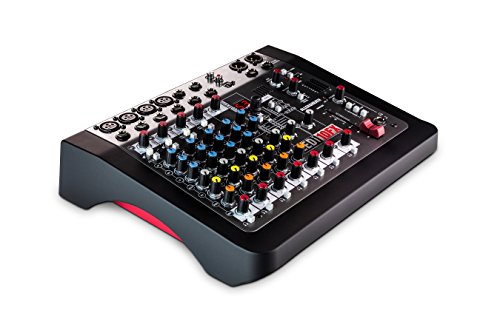
Allen & Heath ZEDi-10FX
Four mic preamps with sweepable 3-band EQ give gigging bands tone control without a digital learning curve. A dedicated FX engine adds reverb, delay, and chorus presets for stage vocals. The USB interface records up to four channels at once for capturing a live set.
Pros
- Sweepable mid EQ on every mic channel
- Dedicated FX engine covers common live effects
- Metal chassis holds up to touring use
Cons
- FX engine runs only one effect at a time
- No onboard compression on individual channels
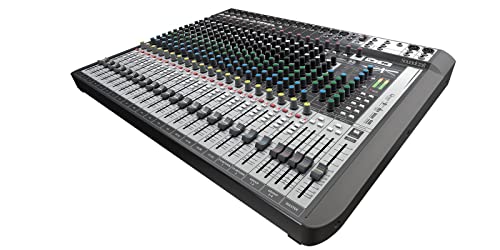
Soundcraft Signature 12MTK
A sixteen-track USB interface captures every input separately, letting bands mix a live set later in a DAW instead of committing to a stereo bounce. Lexicon reverb adds studio-quality ambience to vocals and instruments alike. Sweepable mid EQ across four bands shapes tone without an outboard processor.
Pros
- Sixteen-track USB recording captures a full live set
- Built-in Lexicon reverb adds studio-quality ambience
- Four-band EQ with sweepable mid frequency
Cons
- No SD card backup if the USB connection drops
- Bulkier footprint than ten-channel alternatives

Zoom LiveTrak L-8
Battery power frees this digital mixer from a wall outlet, suiting podcasters recording outside a fixed studio. Eight combo inputs record individually to SD card, each with its own built-in compressor. Faders double as monitor mix controls for headphone-only setups.
Pros
- Runs on batteries for field recording
- Individual channel compression built into each input
- Records to SD card without a computer
Cons
- Small buttons slow down menu navigation
- Fewer EQ bands per channel than analog rivals
What matters most
What to look for in an audio mixer Channel count decides how many mics and instruments plug in at once, so count real inputs before comparing boards. Phantom power needs a 48V switch, either global or per channel, for condenser mics to function. A built-in USB interface turns any mixer into a DAW recording input without extra hardware. EQ ranges from basic two-band tone controls to sweepable mid bands that shape vocal frequencies with more precision.
How many channels does your setup need Solo podcasters and streamers rarely need more than six channels for a host mic, guest mic, and music input. Full drum kits push band setups toward twelve to eighteen channels once overheads, kick, snare, and vocals are counted separately. Church and event teams tend to land around ten to twelve channels for a small praise team plus speech mics. Extra unused channels add cost and desk space without any real benefit.
Analog vs digital mixing, which fits your workflow Physical knobs on analog boards like the Yamaha MG10XU and Allen & Heath ZEDi-10FX give instant hands-on control over every parameter. Digital designs such as the Zoom LiveTrak L-8 pack more processing into a smaller chassis but rely on menus for deeper settings. Hybrid units, including the PreSonus StudioLive AR12c, pair analog channel strips with digital recording features. Pick analog for simplicity and digital for portability with per-channel processing.
When multitrack recording is worth it Live bands benefit most from multitrack USB outputs, since every channel gets captured separately for mixing after the show. Both the Soundcraft Signature 12MTK and Behringer Xenyx X1832USB output each channel over USB for exactly this reason. Podcasters rarely need more than stereo recording, because guests get balanced live instead of fixed later. SD card backup, built into the Zoom LiveTrak L-8 and PreSonus StudioLive AR12c, saves a show even if the USB connection drops.
How they compare
| # | Model | Channels | Best for | Score | Price |
|---|---|---|---|---|---|
| 1 | Yamaha MG10XU | 10 (4 mono, 3 stereo) | Best overall | 9.4 | Check price |
| 2 | Behringer Xenyx X1832USB | 18 (12 mono, 3 stereo) | Best value | 9.0 | Check price |
| 3 | Mackie ProFX6v3 | 6 (2 mono, 2 stereo) | Best budget | 8.8 | Check price |
| 4 | PreSonus StudioLive AR12c | 12 (10 mono, 2 stereo) | Best for hybrid recording | 8.6 | Check price |
| 5 | Allen & Heath ZEDi-10FX | 10 (4 mono, 3 stereo) | Best for live bands | 8.4 | Check price |
| 6 | Soundcraft Signature 12MTK | 12 (8 mono, 2 stereo) | Best for multitrack recording | 8.2 | Check price |
| 7 | Zoom LiveTrak L-8 | 8 combo XLR/TRS inputs | Best for portable podcasting | 8.0 | Check price |
Common questions
What is the best audio mixer for beginners?
The Yamaha MG10XU works well for beginners since its controls are labeled clearly and its USB interface connects to free recording software without extra drivers.
How many channels do I need on a mixer?
Count every mic, instrument, and playback source used at once, then add two spare channels. Podcasters often need four to six; bands need twelve to eighteen.
Can a mixer double as an audio interface for recording?
Yes, most mixers with a USB port function as an audio interface. Both the Yamaha MG10XU and Mackie ProFX6v3 send their mix to a computer over USB for DAW recording.
Do all microphones need phantom power?
No, phantom power only powers condenser microphones. Dynamic mics like the Shure SM7B skip it entirely, and leaving it on will not damage them.
Digital mixer vs analog mixer for live sound, which wins?
Analog suits smaller live setups where hands-on knob control matters most. Digital fits larger productions that need scene recall and per-channel processing in one compact unit.
Which mixer works best for a home podcast studio?
The Mackie ProFX6v3 fits a two-person podcast setup, while the PreSonus StudioLive AR12c suits shows with more guests needing separate headphone mixes.
Is a mixer with built-in effects worth it?
Built-in reverb and delay save money on outboard gear for live vocals, though a home studio doing detailed mixing often gets better results adding effects inside a DAW.
What mixer fits a small church or worship team?
Both the Behringer Xenyx X1832USB and Allen & Heath ZEDi-10FX offer enough channels for a praise team plus speech mics, with per-channel EQ for room acoustics.
What is the difference between a mono and stereo channel on a mixer?
A mono channel takes one input, usually a mic or instrument, and can be panned anywhere in the mix. A stereo channel takes a paired left and right signal, like a keyboard, and keeps that pairing fixed.
Can a mixer replace separate compressors for live vocals?
Boards with onboard compression, like the Mackie ProFX6v3 and Zoom LiveTrak L-8, tame vocal peaks without an outboard unit, though the settings offer less control than a dedicated compressor pedal.
The verdict
The Yamaha MG10XU covers the widest range of home studio and small band needs, thanks to clean preamps and a built-in USB interface. Bands filling out a full live setup should step up to the Behringer Xenyx X1832USB for the extra channels. Podcasters recording outside a fixed room get more flexibility from the battery-powered Zoom LiveTrak L-8 instead.
Marcus Chen
Marcus covered consumer electronics for enthusiast tech publications for six years before joining ChoiceCrest. He specializes in translating manufacturer spec sheets into plain-language buying advice, with a focus on audio, computing accessories and smart-home gear.
You might also need
Nintendo Game & Watch: Super Mario Bros Review: Still Worth It as a Collectible?

Ray-Ban Meta (Gen 2) Wayfarer Smart Glasses: Worth $379 for Clear Lenses?
AlyKets Nikon UC-E6 Replacement USB Cable: Does a $7.95 Cord Work as Well as the Original?
