Testing Aquarium Water Accurately Starts With the Right Kit
API Freshwater Master Test Kit stays the most useful first purchase, covering ammonia, nitrite, nitrate and pH with liquid reagents. Reef keepers should add the Hanna Instruments HI772 Alkalinity Checker. Apera Instruments PH60 gives the steadiest digital pH readings over years.
Freshwater keepers should begin with the API Freshwater Master Test Kit, since it covers the four readings that decide whether a new tank is safe. Reef systems need the Hanna Instruments HI772 Alkalinity Checker alongside it. Reach for the Apera Instruments PH60 when a colour chart no longer gives enough precision.
Testing goes wrong because the cheapest tools inspire the most confidence. Strips degrade in a humid fish room, colour charts shift under warm bulbs, and expired reagents drift quietly. We compared reagent kits against digital meters on parameters covered, resolution, calibration demands and owner reports of agreement between tools over months.
The shortlist, ranked

API Freshwater Master Test Kit
Four parameters cover everything that decides whether a new tank kills fish. Liquid reagents hold accuracy far longer than strips, and one box runs to roughly 800 tests. Reading the nitrate chart takes practice, so hold the vial against white paper in daylight.
Pros
- Covers every parameter a new tank needs
- Roughly 800 tests per box
- Far more stable than test strips
Cons
- Nitrate colour chart is hard to read
- Shaking steps must be timed exactly
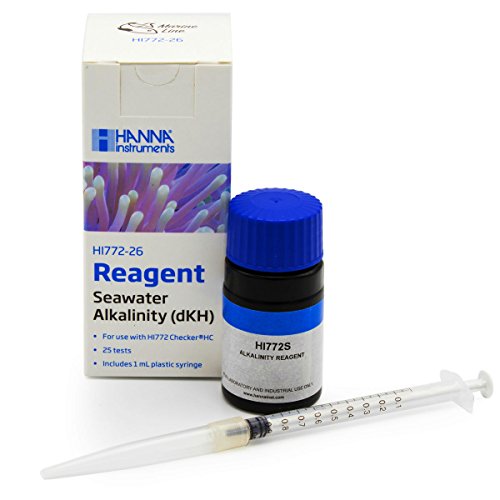
Hanna Instruments HI772 Alkalinity Checker
Alkalinity swings kill corals faster than almost anything, and judging a titration colour by eye introduces exactly the error you cannot afford. This colorimeter returns a number in dKH at 0.1 resolution. Owners report it tracks daily drift closely enough to set a dosing schedule.
Pros
- Removes colour interpretation entirely
- Resolution fine enough for reef dosing
- Single button operation takes seconds
Cons
- Measures one parameter only
- Reagent packets need reordering
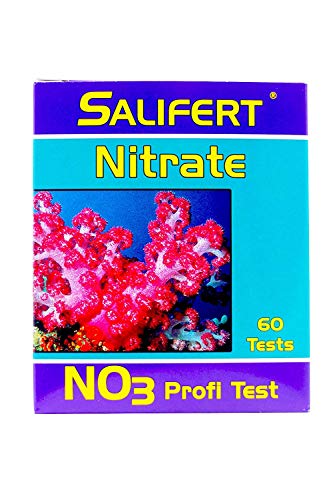
Salifert Nitrate Profi Test Kit
Reef tanks run nitrate far below freshwater levels, where general kits cannot separate 2 from 10 parts per million. Reagents here are formulated for that narrow band, which is where coral colouration problems hide. A syringe procedure takes longer than shake and wait, and returns a usable number.
Pros
- Resolves the low nitrate band reefs need
- Reagents keep well stored cool
- Long standing reputation among reef keepers
Cons
- Procedure is slower and fiddlier
- Around 60 tests per kit

Apera Instruments PH60
Cheap pH pens die when their sealed probe does, taking the whole meter with them. This probe unscrews and swaps, so calibration stays meaningful for years. Automatic temperature compensation matters more than people expect, since pH readings shift with water temperature.
Pros
- Replaceable probe extends usable life
- Resolution of 0.01 pH
- Temperature compensation is automatic
Cons
- Calibration solutions must be kept fresh
- Probe has to be stored wet

Red Sea Reef Foundation Pro Test Kit
Calcium, magnesium and alkalinity move together, so testing one in isolation explains very little. All three arrive here with titration procedures precise enough for a stocked reef. Owners report the included stirrer and syringes make results repeatable after a couple of practice runs.
Pros
- Covers the three linked reef parameters
- Titration method is highly precise
- Works out better than three separate kits
Cons
- Learning curve on the first few runs
- Each test takes several minutes

Milwaukee MW102 pH and Temperature Meter
A cabled electrode reaches into deep tanks and mixing barrels alike, which suits fishrooms and saltwater mixing stations. Two point calibration and temperature compensation keep readings honest between sessions. Bench format is more instrument than a single community tank requires.
Pros
- Readings stay stable across sessions
- Cabled electrode reaches deep tanks and barrels
- Electrode replaces rather than the whole meter
Cons
- Bench body is larger than a pocket pen
- More instrument than one small tank needs

Seachem Ammonia Alert
This sensor disc sticks inside the glass and shifts colour as free ammonia rises. No number appears, and it replaces nothing during a cycle. What it does well is flag a filter failure or an overfeeding accident between scheduled tests.
Pros
- Warns between scheduled tests
- No reagents or procedure involved
- Visible from outside the glass
Cons
- Indicates a range rather than a number
- Needs replacing roughly yearly
The lineup, side by side
| # | Model | Parameters | Best for | Score | Price |
|---|---|---|---|---|---|
| 1 | API Freshwater Master Test Kit | Ammonia, nitrite, nitrate, pH | Best overall | 9.4 | Check price |
| 2 | Hanna Instruments HI772 Alkalinity Checker | Alkalinity in dKH | Best for reef alkalinity | 9.2 | Check price |
| 3 | Salifert Nitrate Profi Test Kit | Nitrate | Best for low range nitrate | 9.0 | Check price |
| 4 | Apera Instruments PH60 | pH and temperature | Best digital pH meter | 8.8 | Check price |
| 5 | Red Sea Reef Foundation Pro Test Kit | Calcium, magnesium, alkalinity | Best for coral chemistry | 8.6 | Check price |
| 6 | Milwaukee MW102 pH and Temperature Meter | pH and temperature | Best for multiple tanks | 8.3 | Check price |
| 7 | Seachem Ammonia Alert | Free ammonia | Best continuous monitor | 8.0 | Check price |
Before you buy
Which aquarium parameters actually matter? Through the first two months, ammonia and nitrite are the only readings that count, because both harm fish at low concentrations. Once cycled, both should sit at zero permanently and nitrate becomes the figure managed through water changes. pH matters as a stability question rather than a target, since most species adapt to a steady value they would not naturally choose.
Liquid reagents versus test strips Strips are fast, convenient and the least reliable option here. Open tubes degrade quickly in humid rooms, and the colour bands are too coarse to separate a safe nitrite reading from a harmful one. Liquid kits ask more up front and deliver far more tests, and owners consistently report closer agreement with digital meters.
Calibrating a digital meter so the number means something An uncalibrated pH pen is a random number with a decimal point. Calibrate against fresh buffer solutions monthly under regular use, store the probe wet in storage solution rather than dry, and replace it when calibration starts drifting fast. A calibrated modest meter beats an uncalibrated expensive one every time.
Building a testing routine for freshwater and reef tanks Weekly nitrate and pH covers a stable freshwater tank, with ammonia and nitrite added whenever filtration changes, stock arrives or a fish dies. Reef systems need alkalinity two or three times a week, since it moves fastest. Write results in a log, because a month of trend data explains far more than any single reading.
Common questions
Which aquarium test kit should a beginner buy first?
A liquid master kit covering ammonia, nitrite, nitrate and pH. Those four decide whether a new tank is safe, and nothing else matters until it has cycled.
Are test strips accurate enough for an aquarium?
For a weekly glance at nitrate in an established tank, often yes. For cycling or diagnosing sick fish they are not, because the colour bands cannot separate safe nitrite from harmful nitrite.
How often should I test aquarium water?
Every day or two while cycling, then weekly once stable. Reef tanks need alkalinity checked more frequently because coral growth and dosing move it quickly.
Do aquarium test reagents expire?
Yes. Most carry a batch date and stay reliable for two to three years unopened. Keep them away from heat and light, and replace any bottle disagreeing with a fresh kit.
Why does my nitrate reading never look right?
Nitrate is the most technique sensitive common test. The second reagent bottle needs vigorous shaking for the full stated time, or crystals stay settled and the result reads far too low.
Do I need a digital pH meter for a community tank?
Only if precision changes what you do, such as reef dosing, discus breeding or carbon dioxide control. A liquid pH test showing week to week stability is enough otherwise.
What alkalinity should a reef tank run?
Most reef keepers hold between 8 and 9 dKH. Steadiness matters more than the exact figure, since swings damage coral more than a stable value slightly off target.
Can I test tap water with aquarium kits?
Yes, and it is worth doing. Source water carrying nitrate or an unexpected pH explains many persistent tank problems that filtration will never fix.
Is a colorimeter worth it over a reagent kit?
For reef alkalinity, yes, because a numeric result removes the judgement call that a titration colour demands. For freshwater parameters, a liquid kit is accurate enough.
The verdict
API Freshwater Master Test Kit remains the right first purchase for almost any aquarium, since it covers the parameters that decide survival through the first two months. Reef keepers should pair it with the Hanna Instruments HI772 for alkalinity and the Red Sea Reef Foundation Pro kit for calcium and magnesium. Add the Apera Instruments PH60 once a colour chart stops giving the precision you need.
Olivia Hartley
Olivia spent several years working at an animal shelter and a pet-supply retailer before joining the editorial team. She researches pet gear with an emphasis on safety, comfort and the fine print that owners often miss.