Aquarium Heaters That Hold a Steady Tank Temperature
The Fluval E-Series Electronic Heater leads this comparison for its digital readout and tight temperature accuracy. Budget-conscious fishkeepers should consider the Aqueon Pro Submersible Heater instead, while the Eheim Jager TruTemp Heater fits anyone wanting a proven analog design with a long track record.
The Fluval E-Series Electronic Heater stands out because its digital display and dual temperature sensors hold tank temperature within a tighter range than basic analog heaters. Its main limitation is price, since the added electronics cost more than a simple analog dial heater.
We compared published wattage options, temperature accuracy, build material and safety features across each listing based on manufacturer specifications.
What we recommend

Fluval E-Series Electronic Heater
Dual temperature sensors cross-check readings, improving accuracy over single-sensor analog heaters that can drift over time. A digital display shows exact tank temperature without guessing based on a dial position. An automatic shutoff triggers if the heater detects it has been removed from water.
Pros
- Dual sensors improve temperature accuracy over single-sensor designs
- Digital display removes guesswork from dial-based settings
- Auto shutoff adds protection if removed from water
Cons
- Higher price than basic analog submersible heaters
- Electronic components add more that could potentially fail versus a simple heating element

Eheim Jager TruTemp Heater
A simple analog dial has stayed largely unchanged for years, a design fishkeepers trust based on long-term reliability. Shatterproof construction resists cracking better than basic glass tube heaters. Accuracy trails digital displays slightly, since the dial requires occasional verification with a separate thermometer.
Pros
- Shatterproof housing resists cracking better than basic glass tubes
- Long-standing design with a strong reliability reputation
- Multiple wattage sizes fit different tank volumes
Cons
- Analog dial is less precise than digital temperature readouts
- No digital display to confirm exact current temperature

Cobalt Aquatics Neo-Therm Heater
A flat, compact shape takes up less visible space in smaller tanks than cylindrical tube heaters. Fully submersible construction allows horizontal or vertical placement depending on tank layout. Temperature control uses a simple dial rather than a digital display.
Pros
- Flat compact shape stays less visible in smaller tanks
- Flexible placement orientation fits different tank layouts
- Fully submersible design works in various setups
Cons
- No digital display for precise temperature confirmation
- Smaller wattage options limit use in larger tanks

Hygger Titanium Aquarium Heater
A titanium tube resists corrosion and impact damage better than glass heaters, a safety advantage in tanks with larger or more active fish. A separate digital controller allows temperature adjustment without reaching into the tank. Titanium construction raises the price compared to standard glass tube heaters.
Pros
- Titanium construction resists corrosion and impact better than glass
- External digital controller simplifies temperature adjustment
- Suited to larger tanks with active or large fish
Cons
- Costs more than standard glass tube heaters
- External controller adds another component outside the tank
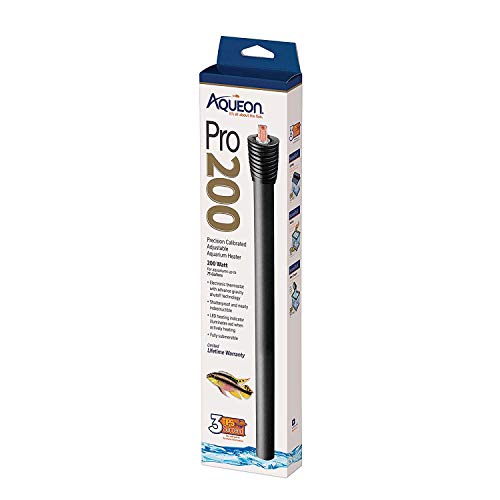
Aqueon Pro Submersible Heater
A straightforward submersible design keeps the price accessible for fishkeepers setting up a first tank. An indicator light shows when the heater is actively warming the water. Temperature accuracy runs adequate for community tanks but trails premium digital heaters.
Pros
- Lower price than premium digital or titanium heaters
- Indicator light shows active heating status at a glance
- Adequate accuracy for standard community tank setups
Cons
- Temperature accuracy trails premium digital controllers
- Build material is less impact resistant than titanium
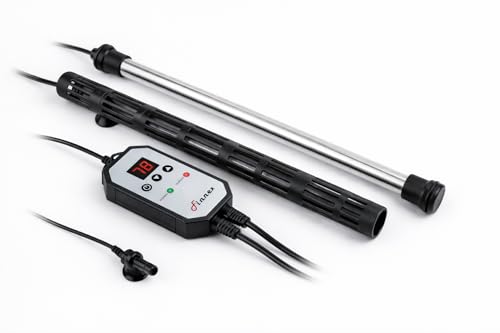
Finnex HMX Deluxe Digital Heater
An external digital controller displays exact temperature and allows fine adjustments without disturbing the tank. The heating element itself stays submerged while the control unit sits outside, easing readability. Setup involves slightly more cabling than a single-piece submersible heater.
Pros
- External digital controller allows easy temperature readability and adjustment
- Precise control suited to sensitive fish species
- Multiple wattage sizes fit different tank volumes
Cons
- Extra cabling and controller add setup complexity
- Price sits above basic single-piece submersible heaters

Fluval M Series Submersible Heater
A slim, shatterproof housing fits discreetly along a tank’s back wall without drawing much visual attention. Dial-based temperature control keeps the design simple compared to digital controller setups. Accuracy is adequate for most community tanks without the precision of dual-sensor digital heaters.
Pros
- Slim shatterproof housing stays discreet in the tank
- Shatterproof build resists cracking better than basic glass
- Simple dial control is easy to set and forget
Cons
- Less precise than digital dual-sensor heaters
- No external display to confirm exact temperature
How to choose
What to look for in an aquarium heater Control type decides accuracy, with digital dual-sensor heaters generally holding temperature tighter than analog dials. Build material affects safety, since titanium and shatterproof housings resist damage better than basic glass. Wattage needs to match tank volume, since an undersized heater struggles to maintain temperature in larger tanks.
Analog versus digital temperature control Analog dial heaters like the Eheim Jager and Aqueon Pro keep the design simple and have a long track record of reliability. Digital heaters like the Fluval E-Series and Finnex HMX Deluxe show exact temperature and often hold a tighter accuracy range. Precision-sensitive setups, like breeding tanks for temperature-sensitive species, generally benefit more from digital control.
Matching wattage to tank size Smaller tanks do fine with compact heaters like the Cobalt Aquatics Neo-Therm sized for lower wattage needs. Larger tanks, especially those with big or active fish, need higher wattage options like those available on the Hygger Titanium Heater. Undersized heaters run constantly trying to reach target temperature, which shortens their working lifespan.
Build material and long-term safety Titanium, used on the Hygger heater, resists corrosion and impact damage better than standard glass tube construction. Shatterproof housings, found on the Eheim Jager and Fluval M Series, reduce breakage risk compared to basic glass heaters. Tanks with large, active or aggressive fish benefit most from the added durability of titanium or shatterproof designs.
The lineup, side by side
| # | Model | Control type | Best for | Score | Price |
|---|---|---|---|---|---|
| 1 | Fluval E-Series Electronic Heater | Digital, dual sensor | Best Overall for Accuracy | 9.1 | Check price |
| 2 | Eheim Jager TruTemp Heater | Analog dial | Best for Proven Reliability | 8.9 | Check price |
| 3 | Cobalt Aquatics Neo-Therm Heater | Analog dial | Best for Compact Tanks | 8.7 | Check price |
| 4 | Hygger Titanium Aquarium Heater | Titanium tube | Best for Durability in Larger Tanks | 8.5 | Check price |
| 5 | Aqueon Pro Submersible Heater | Analog dial with indicator light | Best Budget | 8.2 | Check price |
| 6 | Finnex HMX Deluxe Digital Heater | Digital external controller | Best for Precise Digital Control | 8.1 | Check price |
| 7 | Fluval M Series Submersible Heater | Analog dial | Best for Low-Profile Placement | 8.0 | Check price |
Common questions
What temperature should a tropical fish tank be?
Most tropical freshwater tanks stay between 76 and 80 degrees Fahrenheit, though exact needs vary by species.
How do I know if my aquarium heater is accurate?
Checking tank temperature with a separate thermometer against the heater’s dial or display, like on the Fluval E-Series, confirms accuracy over time.
Is a titanium aquarium heater worth the extra cost?
For tanks with large or active fish prone to bumping the heater, yes, titanium like the Hygger resists impact and corrosion better than glass.
Can an aquarium heater overheat a tank?
A malfunctioning heater can overheat a tank, which is why safety features like auto shutoff on the Fluval E-Series add an extra layer of protection.
Do all aquariums need a heater?
Tropical fish generally need a heater to maintain stable warm temperatures, while some cold water species do not require added heat.
How often should an aquarium heater be checked?
Checking temperature regularly, especially during the first few weeks after installing a new heater, helps catch any drift or malfunction early.
What is the difference between submersible and external aquarium heaters?
Submersible heaters sit fully in the water, while external controller designs like the Finnex HMX Deluxe keep the display and dial outside the tank.
Can an aquarium heater be used in a planted tank?
Yes, most heaters compared here work fine in planted tanks, though placement near strong water flow helps distribute heat evenly.
Final word
The Fluval E-Series Electronic Heater is the best pick for fishkeepers who want precise, verifiable temperature control. Budget-conscious buyers setting up a first tank should choose the Aqueon Pro Submersible Heater instead. Tanks with large or active fish fit better with the impact-resistant Hygger Titanium Aquarium Heater.
Olivia Hartley
Olivia spent several years working at an animal shelter and a pet-supply retailer before joining the editorial team. She researches pet gear with an emphasis on safety, comfort and the fine print that owners often miss.


