What Decorations Are Safe for Large Aquarium Pets?
Fluval Malaysian Driftwood is dense enough that a full grown cichlid cannot shift it, which is the first requirement in a big tank. Penn-Plax Stone Replica Aquarium Cave gives territorial species a defensible base. Zoo Med Mopani Wood is the value centerpiece.
Fluval Malaysian Driftwood anchors a large tank, since dense hardwood stays put when an oscar decides to redecorate. Penn-Plax Stone Replica Aquarium Cave suits territorial cichlids and plecos that want a shelter they can defend. Zoo Med Mopani Wood delivers more visual impact for less outlay.
Decorating around large fish is a different problem from a nano tank. Big cichlids and catfish uproot, shove and occasionally swallow anything that is not heavy or clearly too large to fit in a mouth. We compared weight and stability on sand, whether an adult fish can turn around inside a cave, edge smoothness and chemistry effects. Owner reports on toppled rockwork and swallowed ornaments guided the cautions.
The best picks, ranked

Fluval Malaysian Driftwood
Malaysian driftwood is unusually dense, so it sinks unaided and resists being shoved by large cichlids or catfish. Branching shapes break sightlines, which measurably calms territorial tanks. Owners report several weeks of tannin release that tints the water, a tint many South American species clearly prefer.
Pros
- Heavy enough to resist a determined big fish
- Branches break sightlines and reduce chasing
- Plecos graze the surface biofilm
Cons
- Tints the water for several weeks
- Shape differs from the listing photo
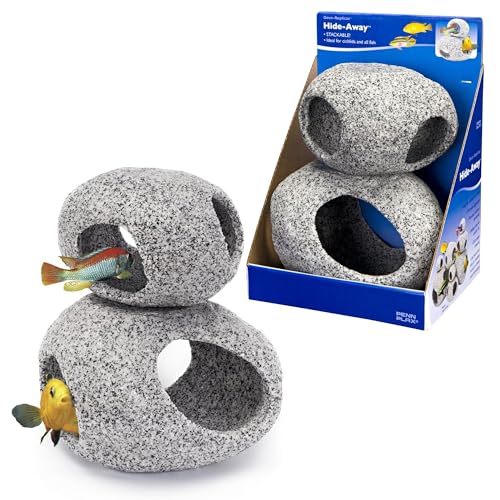
Penn-Plax Stone Replica Aquarium Cave
A molded stone style shell with an opening wide enough for a grown cichlid or pleco to back into, which is what separates a usable cave from a decoration. Resin construction keeps it inert, so hardness and pH stay where you set them. Owners report visibly less squabbling once territorial fish have a base to hold.
Pros
- Opening sized for adult fish, not juveniles
- Inert in soft and hard water alike
- Heavy enough to stay where placed
Cons
- Takes up significant floor area
- Interior is awkward to reach when cleaning

Blue Ribbon Exotic Environments Sunken Ship
Open decks and hull gaps are cut wide enough for sizeable fish to pass through rather than wedge into. In a four foot tank it works as the single focal point without crowding the swim path. Owners report the paint survives repeated algae scraping and the base beds stably into sand.
Pros
- Openings sized for larger bodied fish
- Carries the look of a big display tank
- Beds stably into sand or gravel
Cons
- Bulky, so a wide footprint is essential
- Detailed areas collect debris

Zoo Med Mopani Wood
Large mopani pieces deliver a lot of structure for a modest outlay, and the two tone coloring stands out sharply against pale sand. Density is high enough to sink after a soak and to discourage most fish from moving it. Owners report that scrubbing and soaking beforehand cuts the initial tannin release considerably.
Pros
- Large piece for the outlay
- Distinctive two tone appearance against sand
- Good grazing surface for plecos
Cons
- Needs soaking before it stays down
- Heavy tannin release in the first weeks

Zoo Med Sinking Ceramic Log
Fired ceramic sinks straight away with no soaking, no tannins and no chemistry shift, which suits keepers holding specific parameters. The tube shape matches how catfish and loaches wedge themselves in to rest. Lifting it out for a scrub during maintenance takes seconds.
Pros
- No soaking and no tannin release
- Inert in every water type
- Simple to lift out and clean
Cons
- Looks less natural than real wood
- Some sizes offer only one entrance
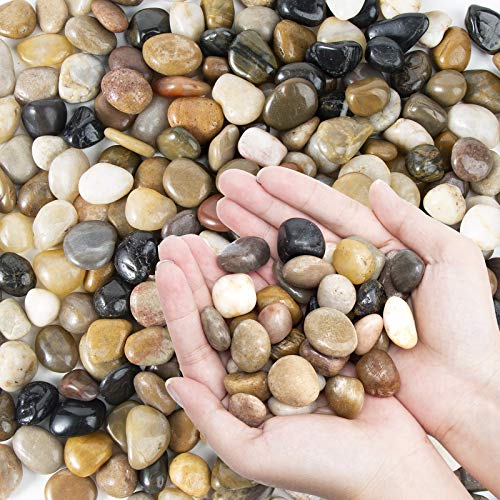
Marina Decorative Natural Rock
Molded resin gives the look of stone without the weight that cracks glass, so pieces can sit safely against the panes. Being resin rather than limestone, it leaves hardness untouched in soft water setups. Owners report it stacks into ledges and overhangs without the rockslide risk real stone carries.
Pros
- Safer against glass than real stone
- Leaves water hardness unchanged
- Builds ledges and overhangs easily
Cons
- Light enough for a big fish to move
- Less convincing at close range

hygger Aquarium Rock Cave Decoration
A plain resin cave that adds shelter cheaply, which matters when several fish each need their own patch. Openings are smooth and the base sits stably on gravel. Owners report that buying two or three is an effective way to cut aggression in a cichlid setup.
Pros
- Cheap way to add several territories
- Smooth openings will not scrape a fish
- Stable on gravel or sand
Cons
- Smaller than a dedicated large cave
- Finish quality varies between units
Side by side
| # | Model | Material | Best for | Score | Price |
|---|---|---|---|---|---|
| 1 | Fluval Malaysian Driftwood | Dense natural hardwood | Best overall | 9.4 | Check price |
| 2 | Penn-Plax Stone Replica Aquarium Cave | Non toxic molded resin | Best cave | 9.2 | Check price |
| 3 | Blue Ribbon Exotic Environments Sunken Ship | Non toxic resin | Best statement piece | 9.0 | Check price |
| 4 | Zoo Med Mopani Wood | Natural mopani hardwood | Best value centerpiece | 8.8 | Check price |
| 5 | Zoo Med Sinking Ceramic Log | Fired ceramic | Best for bottom dwellers | 8.6 | Check price |
| 6 | Marina Decorative Natural Rock | Molded resin rock | Best for aquascaping | 8.3 | Check price |
| 7 | hygger Aquarium Rock Cave Decoration | Non toxic resin | Best budget shelter | 8.0 | Check price |
What to look for
Why weight decides everything with big fish Oscars, large cichlids and plecos rearrange a tank as a matter of routine, digging under ornaments and pushing light ones across the floor. Dense driftwood, fired ceramic and heavy resin stay where they are placed. Hollow lightweight pieces migrate to the filter intake within a week. If an item feels light in your hand out of the water, it will not survive contact with a determined big fish.
How to size caves to adult fish, not juveniles A shelter a young fish uses happily becomes a trap once it doubles in length. Check the adult size of the species, then pick caves where a full grown fish can turn around or reverse out. Two exits beat one on any hollow ornament. Smooth interiors matter too, since a fish that wedges itself in tightly picks up the scrapes that lead to infection.
Wood, rock and water chemistry for cichlids Natural wood releases tannins and nudges pH downward, which suits South American and Asian biotopes. African rift lake cichlids want the opposite, so limestone and crushed coral raise hardness there deliberately. Resin and ceramic change nothing at all, making them the safe default whenever specific parameters have to hold steady. Match the material to the fish before matching it to your taste.
How to build rockwork that cannot topple Rockwork knocked over by a digging fish can crack a tank base or crush a resident. Bed the bottom pieces directly onto the glass or a foam mat before substrate goes in, so nothing can be undermined later. Avoid tall balanced stacks entirely. Aquarium safe silicone or an eggcrate base plate is worth the trouble in any tank holding fish that excavate.
Common questions
What decorations are safest for large aggressive fish?
Dense driftwood, fired ceramic and heavy molded resin. All three resist being moved, carry no small parts to swallow and survive constant contact. Skip lightweight hollow ornaments and anything with thin projecting detail.
Will my big fish swallow small decorations?
Large cichlids and catfish mouth almost anything, and small ornaments or gravel can lodge in the throat. Choose decor clearly too large to fit in your biggest fish, and prefer sand or coarse substrate in tanks with big mouths.
Do I need to boil driftwood before adding it?
Boiling or a long soak speeds sinking, washes off surface debris and reduces the first tannin surge. Dense woods that already sink do not strictly need it, but the first few weeks stay much tidier.
How many caves does a cichlid tank need?
More caves than fish, so a displaced individual always has somewhere to go. Spreading them along the back and sides breaks the tank into territories and stops fighting over one contested shelter.
Can I use rocks collected from outside?
Only with care. Scrub thoroughly, reject anything crumbly and test with vinegar. Fizzing means carbonates that raise hardness and pH. Rocks with metallic veins or unknown origin are best left where they were found.
How do I clean decorations in a large tank?
Lift pieces out during a water change and scrub in a bucket of old tank water. Never use soap. Heavy items that are awkward to remove can be scrubbed in place while a siphon catches the debris that lifts off.
Do decorations reduce aggression in big tanks?
Usually. Breaking sightlines is one of the most effective calming measures available, because fish that cannot constantly see each other chase far less. Tall wood and rock structures beat low flat ornaments for this.
Do plecos need driftwood specifically?
Many common plecos rasp on wood and graze the biofilm it grows. Including at least one substantial piece of driftwood is standard practice in tanks housing them.
Resin or real rock: which is better for a cichlid tank?
Resin such as the Marina rock is safer against glass and leaves hardness alone, which suits soft water species. Real limestone raises hardness, which African rift lake cichlids actually want, so the answer depends on the fish.
Final word
Fluval Malaysian Driftwood is the piece to build a large tank around, since it sinks unaided, resists rearrangement and breaks the sightlines that drive aggression. Add Penn-Plax Stone Replica Aquarium Cave when territorial species need a defensible base. Zoo Med Mopani Wood delivers the most visual impact for the outlay if the budget is tight.
Olivia Hartley
Olivia spent several years working at an animal shelter and a pet-supply retailer before joining the editorial team. She researches pet gear with an emphasis on safety, comfort and the fine print that owners often miss.