Angle Grinders That Survive Daily Contractor Use
DeWalt DWE402 leads for daily jobsite grinding, combining 11 amps with a dust ejection path that keeps grit out of the motor. Milwaukee 2880-20 M18 FUEL matches that pace cordless and adds RAPIDSTOP braking. Metabo HPT G12SR4 serves as a light second grinder for a dedicated cut off wheel.
DeWalt DWE402 fits the contractor cutting rebar and dressing welds most days. Its 11 amp motor holds speed in mild steel, and the paddle switch drops power the instant your grip opens. Weight near 5.7 pounds still punishes overhead work. Crews already carrying M18 or 20V MAX packs will move faster cordless.
Spec sheets make grinders look interchangeable, and they are not. We compared rated amps, no load speed, switch design, spindle lock, dust ejection and guard adjustment. Owner reports filled the remaining gaps, mostly recurring notes on bearing life, brush wear and vibration across long shifts.
Our top picks

DeWalt DWE402 4-1/2-Inch Angle Grinder
Eleven amps at 11,000 rpm cuts rebar, dresses welds and strips rust without bogging in mild steel. Debris leaves through a dust ejection path instead of packing into the windings, which matters on block and brick days. Guard angle changes by hand, so moving from a cut off wheel to a flap disc costs seconds.
Pros
- Holds rpm under constant grinding load
- Dust ejection keeps grit away from the motor
- Guard rotates without a wrench
Cons
- Wheel coasts down with no electronic brake
- Paddle switch tires the hand on long cuts

Milwaukee 2880-20 M18 FUEL 4-1/2 in. / 5 in. Grinder
Brushless M18 power spins both 4-1/2 and 5 inch wheels, so one tool covers cut off discs and flap discs. RAPIDSTOP braking halts the wheel within seconds of release. Milwaukee sells it bare, which only pays off when M18 packs already ride in the van.
Pros
- RAPIDSTOP brake ends wheel coasting
- No cord to drag onto scaffold or a roof
- Overload protection shuts the motor down early
Cons
- Battery and charger are separate purchases
- High capacity packs add noticeable weight
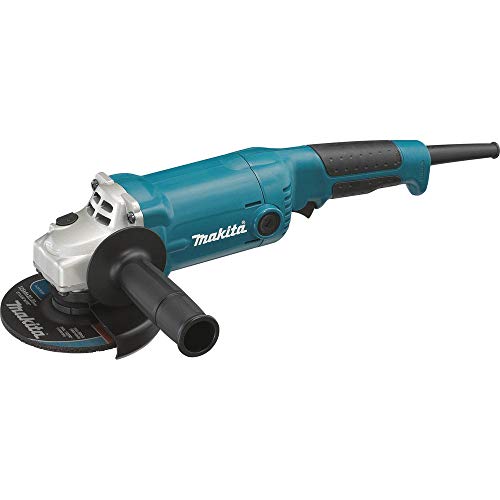
Makita GA5052 5-Inch Angle Grinder
Twelve amps drive 4-1/2 or 5 inch wheels, and the SJS II clutch disengages the gears when a disc binds. That saves the gearcase and your wrist during a pinched cut. Labyrinth construction routes abrasive dust away from the bearings, while the barrel stays slim enough for a smaller glove.
Pros
- Clutch absorbs the shock of a sudden bind
- Labyrinth sealing extends bearing life in masonry dust
- Narrow body suits smaller hands
Cons
- Slide switch keeps running if the tool is dropped
- Sits above basic corded models on cost

Bosch GWS13-50VSP 5-Inch Variable Speed Angle Grinder
Speed dials from roughly 2,800 to 11,500 rpm, opening up wire wheeling, polishing and stainless work where heat stains show. Thirteen amps keeps the 5 inch wheel turning under pressure. Vibration control in the side handle cuts the buzz that builds through an afternoon of weld cleanup.
Pros
- Low speeds avoid burning stainless
- 13 amp motor resists bogging in thick stock
- Damped side handle reduces hand numbness
Cons
- Heavier than a basic 4-1/2 inch grinder
- Speed dial can move when the tool is knocked

DeWalt DCG413B 20V MAX XR Brushless Angle Grinder
Brushless 20V MAX XR power pairs an electronic brake with kickback detection that cuts current on a pinch. Paddle placement copies the corded DeWalt feel, so crews swap between the two without thinking. Runtime rides entirely on pack size, and a 5.0Ah battery is the sensible match for cut off work.
Pros
- Electronic brake and kickback cutoff included
- Shares 20V MAX packs with the rest of the kit
- Paddle switch matches the corded DWE402
Cons
- Compact packs empty fast on cut off wheels
- Bare tool needs a charger already on site

Metabo HPT G12SR4 4-1/2-Inch Angle Grinder
Six point two amps and 10,000 rpm cover rust removal, chamfering and short cuts in thin stock. Around 4 pounds means an apprentice can hold it overhead without shaking. Many contractors buy two and leave one loaded with a cut off wheel permanently.
Pros
- Light enough for extended overhead trimming
- Cheap enough to dedicate to one wheel type
- Spindle lock speeds disc swaps
Cons
- Bogs during continuous heavy grinding
- Slide switch keeps spinning after a drop

Makita GA7021 7-Inch Angle Grinder
Fifteen amps spin a 7 inch wheel at 8,500 rpm, clearing slab surfaces and heavy weld beads several times faster than a small grinder. Two hands and hearing protection are not optional here. Framing bays and overhead corners stay off limits, so this tool sits beside a 4-1/2 inch grinder rather than replacing it.
Pros
- Covers wide concrete and steel surfaces quickly
- Big motor holds speed through heavy passes
- Gear housing takes site abuse
Cons
- Too bulky for tight or overhead work
- Wheels and guards are harder to source locally
How to pick the right one
What to look for in a jobsite grinder Amp rating predicts how long a wheel holds speed under load. Under 7 amps suits occasional rust removal and stalls on continuous work. Daily trade use starts around 11 amps, paired with sealed or labyrinth bearings and a metal gear case. Tool free guard adjustment sounds minor until you count the disc swaps in one day. Brush access and cord length decide how long a corded grinder stays in service rather than in a repair pile.
Paddle switch, slide switch and why brakes matter Release a paddle switch and power stops immediately. Many general contractors require that on site for exactly that reason. Slide switches ask less of the hand during long grinding runs, but a dropped tool keeps spinning across the deck. Braking adds the second layer, stopping a disc in roughly two seconds instead of letting it coast. Kickback detection goes further and cuts current the moment a wheel pinches inside a cut.
Corded or cordless on a working site Scaffold, roofs and occupied buildings favour cordless, where a cord becomes a trip hazard and an extension run burns ten minutes. Brushless 18V and 20V tools cut steel studs, strut and light angle iron without complaint. Abrasive cut off work is the exception, since it empties a pack quickly. Fabrication and long grinding sessions still belong to corded motors. Most crews end up owning both and choosing by access rather than preference.
Choosing disc size by trade Remodelers and electricians stay on 4-1/2 inch wheels because they fit between joists and inside stud bays. Fabricators gain reach and surface coverage from 5 inch discs, and dual rated tools like the Makita GA5052 accept either. Concrete and structural steel work justifies a 7 inch machine such as the GA7021, where wheel width shortens the job. Skip the 7 inch tool entirely if most of your grinding happens above shoulder height or inside framing.
How they stack up
| # | Model | Motor | Best for | Score | Price |
|---|---|---|---|---|---|
| 1 | DeWalt DWE402 4-1/2-Inch Angle Grinder | 11 amp | Best overall | 9.4 | Check price |
| 2 | Milwaukee 2880-20 M18 FUEL 4-1/2 in. / 5 in. Grinder | M18 brushless, 18V | Best cordless | 9.2 | Check price |
| 3 | Makita GA5052 5-Inch Angle Grinder | 12 amp | Best for long shifts | 9.0 | Check price |
| 4 | Bosch GWS13-50VSP 5-Inch Variable Speed Angle Grinder | 13 amp | Best for variable speed work | 8.7 | Check price |
| 5 | DeWalt DCG413B 20V MAX XR Brushless Angle Grinder | 20V MAX XR brushless | Best value cordless | 8.5 | Check price |
| 6 | Metabo HPT G12SR4 4-1/2-Inch Angle Grinder | 6.2 amp | Best budget | 8.2 | Check price |
| 7 | Makita GA7021 7-Inch Angle Grinder | 15 amp | Best for large surface grinding | 8.0 | Check price |
Good to know
What size angle grinder do most contractors use?
A 4-1/2 inch grinder stays the default because it reaches into stud bays and overhead spaces. Fabricators and concrete crews add a 5 inch or 7 inch machine for surface work.
How many amps do you need in an angle grinder?
Six to seven amps handles occasional jobs. Daily cutting and weld dressing calls for 11 amps or more so the wheel does not slow under pressure.
Paddle switch vs slide switch: which is better on a jobsite?
Paddle switches are safer because power ends on release, and some sites mandate them. Slide switches cause less hand fatigue on long runs, so many contractors keep one of each.
Corded vs cordless angle grinder for contractors?
Cordless wins on roofs, scaffold and finish work where cords tangle. Corded wins on continuous grinding and fabrication, since abrasive cutting drains batteries fast.
Does an angle grinder brake really matter?
Yes. A wheel brake stops a disc in about two seconds rather than letting it coast, which shortens the window where a live wheel can touch a leg or a cord.
Can you put a 5 inch wheel on a 4-1/2 inch grinder?
Only when the tool is rated for both and the guard fits the larger disc. Milwaukee 2880-20 and Makita GA5052 list both sizes for that reason.
What is SJS II on a Makita grinder?
It is a mechanical clutch that disengages drive when the wheel binds. Gears survive the shock, and the sudden twist that yanks a grinder sideways gets absorbed.
Which angle grinder is best for cutting rebar?
DeWalt DWE402 handles repeated rebar cuts on a corded circuit. Cordless crews get similar cutting pace from the Milwaukee 2880-20 with a high capacity pack fitted.
Why do angle grinder brushes wear out so fast?
Masonry and concrete dust reaches the commutator and accelerates wear. Dust ejection ports and labyrinth sealed bearings are the features owners credit with longer service life.
Is a 7 inch angle grinder worth it for concrete?
For slab prep and heavy weld removal, yes, because wheel width covers ground fast. For remodel work inside framing, a 7 inch tool mostly sits in the truck.
Our take
Buy the DeWalt DWE402 if you are choosing one grinder: 11 amps, dust ejection and a paddle switch cover the bulk of trade work with no battery investment. Crews already running M18 packs should take the Milwaukee 2880-20 instead, mainly for the wheel brake and cord free access on scaffold. Add a Metabo HPT G12SR4 as a dedicated cut off tool so nobody loses ten minutes a day swapping discs.
Jake Monroe
Jake worked as a residential contractor for over a decade before shifting to full-time writing. He evaluates power tools, hand tools and workshop gear through the lens of someone who has actually used them on job sites, not just read the box.