5 Air Purifiers That Handle Allergens and Odors
Coway Airmega AP-1512HH Mighty ranks first, pairing a 246 dust CADR with filters that stay affordable year after year. Levoit Core 300S drops to around 24 decibels, which suits a bedroom. Winix 5500-2 brings the thicker carbon layer and airflow open plan rooms need.
Coway Airmega AP-1512HH Mighty is the purifier most homes should buy, because it delivers real airflow without punishing filter bills. Bedrooms suit the smaller Levoit Core 300S. Open plan living rooms need the Winix 5500-2 and its heavier carbon stage.
Comparing purifiers is awkward because square footage claims rest on different air change assumptions, so two units quoting 350 square feet can perform very differently. CADR is the figure that survives that problem. We compared published CADR numbers, filter type and annual replacement cost, decibel ranges at lowest and highest speed, and how each unit’s particle sensor reacts to cooking and dust.
What to look for
How do you match CADR to your room size? Clean air delivery rate measures how much filtered air a unit produces each minute, and it is the only figure that compares models fairly. Take your room area in square feet, then look for a smoke CADR of at least two thirds that number. A 300 square foot lounge wants roughly 200. That ratio lands you near four or five air changes an hour. Manufacturer coverage claims often assume two, which is too slow for allergy relief.
What do air purifier filters cost to replace? Purchase price is only the entry fee. HEPA elements usually need swapping every six to twelve months, and carbon saturates sooner in homes with pets or heavy cooking. Units with a washable pre filter stretch HEPA life, because hair and coarse dust never reach the pleats. Annual filter cost varies by several times across the models here, so look up the replacement part before ordering the machine.
Which air purifier is quiet enough for a bedroom? A unit running all day on low removes far more particulate than one blasted for an hour and then switched off. Look for a quoted floor below about 30 decibels: the Levoit Core 300S sits near 24 and the Blueair 411 near 17. Sizing up helps as well. A larger purifier running at medium in a small bedroom is both quieter and more effective than a small one pinned at maximum.
What can an air purifier not fix? HEPA media captures dust, pollen, mould spores, dander and smoke particulate. Activated carbon absorbs many odours and volatile compounds. Neither touches carbon monoxide or radon, and neither stops mould regrowing on a damp wall. Ventilation problems and leaks need fixing at source. Skip ozone generators in occupied rooms, and where a unit includes an ioniser, check that it switches off like the Winix PlasmaWave does.
The top picks, ranked

Coway Airmega AP-1512HH Mighty Air Purifier
Three stages handle the work: a washable pre filter, activated carbon, then true HEPA, across rooms up to about 361 square feet. Auto mode tracks a particle sensor and settles rather than surging every time someone walks past. Replacement filters stay reasonably priced, which matters far more across three years than the initial outlay.
Pros
- Strong clean air delivery for its footprint
- Washable pre filter extends HEPA life
- Auto mode reacts sensibly to the sensor
Cons
- Air quality light cannot be fully dimmed on all modes
- Bulkier than slim tower designs
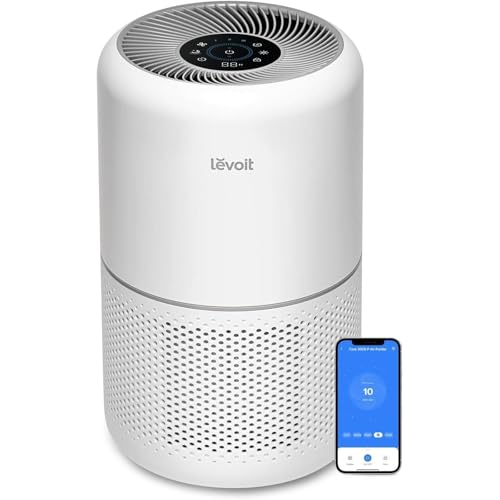
Levoit Core 300S Smart Air Purifier
At its lowest speed this measures around 24 decibels, quiet enough that most owners forget it is running. One cartridge combines pre filter, carbon and HEPA, and the app handles schedules and filter reminders. Rated coverage stops near 219 square feet, so treat it as a single room unit.
Pros
- Sleep mode is genuinely unobtrusive
- Small enough for a nightstand
- App scheduling and filter tracking
Cons
- Coverage limits it to smaller rooms
- Single cartridge replaces all three stages at once

Winix 5500-2 Air Purifier
Airflow here suits open plan living, and a thick carbon stage sits behind the true HEPA filter to catch cooking and pet odours. PlasmaWave ionisation switches off if you prefer purely mechanical filtration. Running on high is audibly louder than the Levoit, which is what the extra 360 square feet of coverage costs.
Pros
- Substantial carbon layer clears odours
- Moves enough air for open plan rooms
- Ionisation can be turned off entirely
Cons
- Loud on the highest setting
- Larger footprint than tower models

Blueair Blue Pure 411 Auto Air Purifier
A cylindrical body pulls air in through 360 degrees, so it works tucked into a nursery corner or beside a desk. Mechanical filtration combines with a light electrostatic charge, which keeps airflow up while noise starts around 17 decibels. Rated coverage of roughly 190 square feet is the smallest here, and the fabric sleeve needs vacuuming to keep performance up.
Pros
- Lowest measured noise in this group
- Occupies very little floor space
- Washable fabric pre filter sleeve
Cons
- Smallest coverage area here
- Filter life shortens quickly in dusty homes

Honeywell HPA300 True HEPA Allergen Remover
Honeywell rates this at five air changes per hour across 465 square feet, which is the turnover allergy guidance points toward. Three separate HEPA filters plus a carbon pre filter cope with heavy dust and dander loads. Turbo speed is the loudest setting in this roundup, and annual filter cost is the highest.
Pros
- Highest air change rate here
- Copes with heavy dust and dander
- Plain button controls, no app needed
Cons
- Loudest unit on its top speed
- Highest annual filter cost in this group

Levoit Vital 200S Smart Air Purifier
A washable pet hair pre filter sits ahead of the HEPA stage, so fur never reaches the pleats and the main filter lasts noticeably longer. Pet mode lifts fan speed to catch dander before it settles on soft furnishings. Coverage reaches about 380 square feet, though the wide body needs clearance on three sides.
Pros
- Pre filter designed specifically for fur
- Good coverage for its cabinet size
- Voice control and automation supported
Cons
- Needs clearance on several sides
- Pet mode is noticeably louder

Dyson Purifier Cool TP07
Bladeless cooling and sealed HEPA H13 filtration share one tower, which frees floor space in summer. Its app reports particulate and volatile compound readings in real time rather than a coloured light. Clean air delivery trails the Coway and Winix for the outlay, so this is a design and convenience choice.
Pros
- Replaces a summer fan as well
- Detailed air quality reporting in the app
- Sealed filter housing stops bypass leakage
Cons
- Lower clean air delivery than cheaper rivals
- Replacement filters cost more than most here
How they stack up
| # | Model | Coverage | Best for | Score | Price |
|---|---|---|---|---|---|
| 1 | Coway Airmega AP-1512HH Mighty Air Purifier | About 361 square feet | Best overall | 9.4 | Check price |
| 2 | Levoit Core 300S Smart Air Purifier | About 219 square feet | Best for bedrooms | 9.2 | Check price |
| 3 | Winix 5500-2 Air Purifier | About 360 square feet | Best for large rooms | 9.0 | Check price |
| 4 | Blueair Blue Pure 411 Auto Air Purifier | About 190 square feet | Best for small spaces | 8.8 | Check price |
| 5 | Honeywell HPA300 True HEPA Allergen Remover | About 465 square feet | Best for allergy sufferers | 8.6 | Check price |
| 6 | Levoit Vital 200S Smart Air Purifier | About 380 square feet | Best for pet owners | 8.3 | Check price |
| 7 | Dyson Purifier Cool TP07 | Rated for medium to large rooms | Best two in one | 8.0 | Check price |
Questions worth asking
What size air purifier do I need for my room?
Compare smoke CADR against room area in square feet and aim for at least two thirds. A 240 square foot bedroom wants a CADR near 160. That gives roughly four to five air changes an hour, which is what allergy guidance points toward.
Do air purifiers help with allergies?
Owners consistently report fewer symptoms from pollen, dust and dander once a correctly sized unit runs continuously. Pair it with source control such as weekly vacuuming and hot washing bedding, since a purifier only captures what becomes airborne.
How often do air purifier filters need replacing?
True HEPA generally lasts six to twelve months. Carbon layers saturate in three to six months where there are pets or frequent frying. Washable pre filters want a vacuum or rinse monthly.
Should I run an air purifier all the time?
Yes. Continuous low or auto running beats intermittent bursts, because particles resettle within minutes of filtration stopping. Power draw on low is small on every model here.
Where should an air purifier be placed?
Put it in the room you occupy most, clear of walls, curtains and furniture that block intake. Most units want several inches of clearance on the intake sides. Behind a sofa is the classic mistake.
Do air purifiers remove smells?
Activated carbon absorbs many cooking, pet and smoke odours. Persistent smells need the source dealt with, since carbon saturates and then stops working without any visible sign.
Are ionisers and ozone generators safe indoors?
Ozone generators are not recommended for occupied rooms. Ionisers such as the Winix PlasmaWave can be switched off, leaving pure mechanical filtration, which sidesteps the question.
Will an air purifier help with mould?
It captures airborne spores and lowers exposure. Growth on a damp surface continues regardless. Fixing the moisture source is the only real remedy.
Is a HEPA purifier better than a fan with a filter?
Yes, for particulate. True HEPA media is tested to a defined capture standard and sits in a sealed path. A filter strapped to a fan leaks air around the edges, which is where most of the dust escapes.
Can one purifier cover a whole house?
Rarely. Doorways and hallways break up airflow, so a single unit mostly treats the room it stands in. Two correctly sized purifiers in the rooms you use beat one oversized machine in a hallway.
Our pick
Coway Airmega AP-1512HH Mighty earns the top spot on the combination that keeps a purifier running for years: strong CADR in a typical room and sensible filter costs. Light sleepers and small bedrooms suit the Levoit Core 300S, which idles near 24 decibels. Choose the Winix 5500-2 for open plan spaces or homes where cooking odours are the real complaint.
Dana Whitfield
Dana spent eight years buying and merchandising for a regional kitchenware retailer before moving into editorial work. She has handled thousands of SKUs across cookware, small appliances and kitchen organization, and focuses on the practical differences that matter once a product is actually in daily use.


