Air Conditioner Covers That Block Winter Debris
Jeacent Central AC Unit Cover balances woven polyester with a mesh vent panel and an elastic hem. Sturdy Covers AC Defender shields only the top, leaving sides open to breathe. Classic Accessories Veranda Square adds a padded top and toggle closure for common condenser sizes.
Jeacent Central AC Unit Cover leads for central condensers, pairing woven polyester with a mesh vent that lets moisture escape. Sturdy Covers AC Defender takes the top-only approach, blocking ice while sides stay open. Classic Accessories Veranda Square delivers a padded structured top for the most common condenser footprints.
Covers fail in two directions. Seal a condenser completely and trapped condensation attacks the coil fins and cabinet through a long winter. Leave it open and falling branches, ice and leaf litter reach the fan. Sizing compounds both problems, since a loose cover flaps itself apart while a tight one never seats. We compared fabric type and coating, venting method, drawcord and strap hardware, and the unit types each cover is built for, alongside multi-season durability reports from owners.
The shortlist, ranked
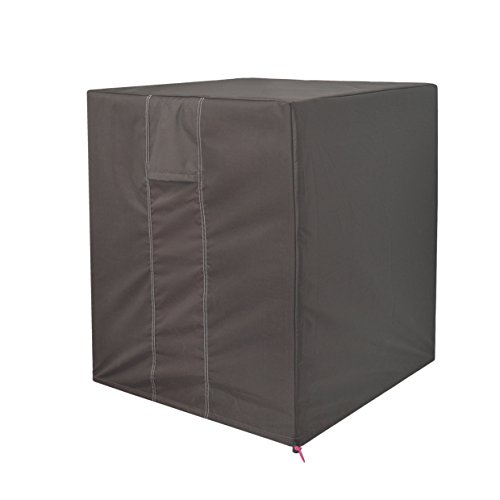
Jeacent Central AC Unit Cover
Woven polyester sheds rain and leaf litter while a mesh panel releases the moisture that would otherwise sit against the coil. An elastic hem pulls the cover snug across common condenser footprints. Owners report it stays seated through gusty weather without added straps.
Pros
- Mesh panel vents trapped condensation
- Woven polyester resists tearing at the seams
- Elastic hem seats without extra hardware
Cons
- Sizing must match your footprint closely
- Covers the cabinet rather than the top only
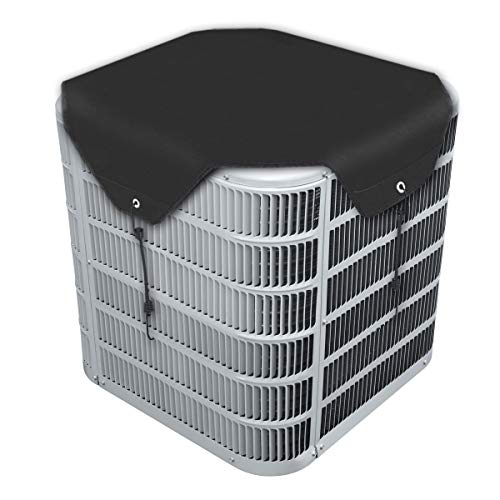
Sturdy Covers AC Defender
Coverage stops at the top of the condenser by design, blocking ice sheets, twigs and leaves from dropping onto the fan blades. Open sides let air move freely, which is what most HVAC guidance recommends for off-season storage. Bungee straps hook under the cabinet lip and hold through storms.
Pros
- Stops ice and branches hitting the fan
- Open sides prevent condensation buildup
- Bungee straps hold in high wind
Cons
- Cabinet sides stay exposed to weather
- Blowing snow can still reach the coil
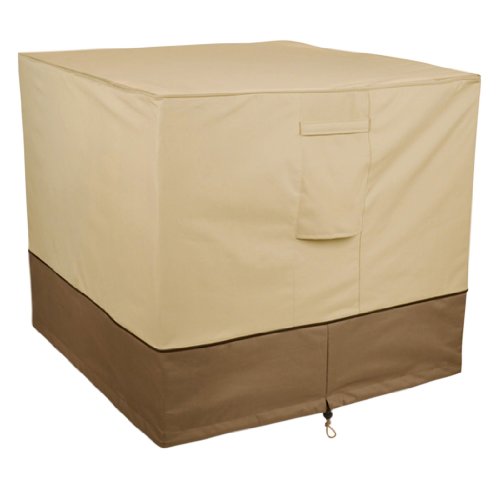
Classic Accessories Veranda Square Air Conditioner Cover
A padded, structured top holds shape under snow load rather than sagging onto the fan grille. Water-resistant fabric plus built-in air vents keep the interior from turning humid. An elastic hem with a toggle drawcord tightens the fit on square condensers.
Pros
- Padded top holds shape under snow
- Toggle drawcord fine-tunes the fit
- Holds up across several seasons
Cons
- Fewer size options than rival lines
- Vents move less air than a full mesh panel

Luxiv Window Air Conditioner Cover
This one faces inward, sealing the interior grille of a window unit against cold air pushing through the chassis. Insulated fabric plus a drawstring closure stops the draft without uninstalling the air conditioner. Exterior weather protection needs a separate outdoor cover.
Pros
- Blocks cold air entering through the chassis
- Unit stays installed all winter
- Drawstring fits varied grille widths
Cons
- Protects the indoor face only
- Useless on central condensers
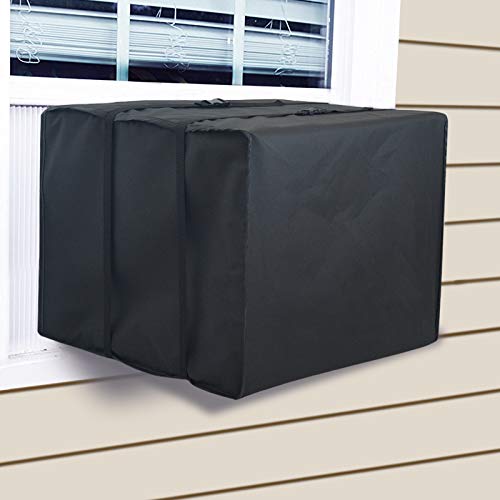
Foozet Window AC Cover Outside
Oxford fabric wraps the outdoor half of a window unit, keeping snow, rain and road grime off the coil. An elastic edge grips the chassis so wind cannot lift it. Material is thinner than heavy-duty central covers, which shows after a few harsh winters.
Pros
- Lowest cost route to window unit protection
- Elastic edge grips the chassis firmly
- Oxford weave sheds snow and rain
Cons
- Narrow range of listed sizes
- Thinner fabric than central unit covers

Duck Covers Ultimate Square Central AC Cover
Reinforced fabric adds noticeable weight over standard covers, which helps on exposed sites. Click-close straps buckle under the cabinet and stay fastened through storms. An integrated vent keeps air moving so the extra thickness does not create a damp pocket.
Pros
- Reinforced fabric handles exposed sites
- Click-close buckles beat elastic in wind
- Integrated vent offsets the heavier build
Cons
- Bulky to fold and store off-season
- Costs more than basic elastic-hem covers

Forid Central Air Conditioner Cover
A full mesh top panel sits above a water-resistant polyester body, releasing heat and moisture while blocking leaves. Drawstring hem plus windproof straps hold the cover on roof decks and open yards. Mesh openings let fine dust through, so a spring rinse is worth planning.
Pros
- Full mesh top moves the most air here
- Windproof straps suit exposed rooftops
- Drawstring hem tightens around the base
Cons
- Fine dust passes through the mesh
- Requires careful size matching
How they stack up
| # | Model | Type | Best for | Score | Price |
|---|---|---|---|---|---|
| 1 | Jeacent Central AC Unit Cover | Central condenser | Best overall | 9.4 | Check price |
| 2 | Sturdy Covers AC Defender | Central top cover | Best for winter ice | 9.2 | Check price |
| 3 | Classic Accessories Veranda Square Air Conditioner Cover | Central condenser | Best value | 9.0 | Check price |
| 4 | Luxiv Window Air Conditioner Cover | Window unit indoor | Best for indoor drafts | 8.7 | Check price |
| 5 | Foozet Window AC Cover Outside | Window unit outdoor | Best budget | 8.5 | Check price |
| 6 | Duck Covers Ultimate Square Central AC Cover | Central condenser | Best heavy-duty | 8.2 | Check price |
| 7 | Forid Central Air Conditioner Cover | Central condenser | Best breathable design | 8.0 | Check price |
How to pick the right one
What an air conditioner cover needs to do Three jobs matter: block falling debris, shed water, and let moisture out. A cover that does the first two and skips the third traps humidity against aluminum fins and steel cabinet panels. Look for mesh panels, open sides or built-in vents on any central unit cover. Fabric weight and strap hardware then decide whether it survives more than one winter.
Full wrap or top cover: which protects better? Top-only covers such as the Sturdy Covers AC Defender stop ice and branches from reaching the fan while leaving sides open to breathe. Full wraps add protection against blowing snow and yard debris, but need vent panels to avoid becoming humidity traps. Mild, wet climates favor top covers. Areas with heavy horizontal snow and lots of tree litter favor a vented full wrap.
How to measure your unit before ordering Take width, depth and height from the outside of the cabinet, not the coil. Compare all three against the listed dimensions rather than trusting a size label. A cover an inch too small will not seat over the corners. One several inches too large flaps in wind and wears through at the hem. Fit is the single largest factor in whether a cover lasts.
Which cover suits windy sites, window units and rooftops? Elastic hems are fine in sheltered yards. Rooftop condensers and open lots need drawcords, buckles or bungee hooks that grip the cabinet lip, as on the Duck Covers Ultimate and Forid models. Window units split into two categories: indoor covers such as the Luxiv seal drafts through the chassis, while outdoor wraps such as the Foozet keep snow off the coil.
Common questions
Should I cover my central AC unit in winter?
A top cover is the common recommendation, since it blocks ice and falling debris while leaving the sides open. Full sealed wraps risk trapping condensation against the coil, which encourages corrosion.
Do AC covers cause rust or mold?
They can when nothing vents. Mesh panels, open sides or built-in vents let humidity escape, which is why every central cover here includes one of the three.
How do I know what size cover to buy?
Measure width, depth and height of the cabinet and match all three to the listing. Aim for a snug fit that clears the corners without stretching the seams.
Can I cover a window air conditioner without removing it?
Yes. Indoor covers such as the Luxiv seal the interior grille against drafts. Outdoor wraps such as the Foozet shield the exterior half while the unit stays in the window.
Will a cover keep mice and pests out of my AC?
A snug cover removes the leaf litter that attracts nesting, but no fabric cover seals a cabinet against determined rodents. Pair it with a seasonal look inside the unit.
Which material lasts longest on an AC cover?
Reinforced woven polyester and coated Oxford fabrics hold up best across seasons. Heavier options such as the Duck Covers Ultimate resist tearing, and a vent panel keeps the extra thickness from trapping damp.
How do I stop the cover blowing off?
Choose buckles, drawcords or bungee straps rather than elastic alone on exposed sites. Fasten every attachment point, and confirm the size is right, since a loose cover catches wind like a sail.
When should I put the cover on and take it off?
Fit it once the cooling season ends and the unit is switched off at the disconnect. Remove it before the first cooling run, because running a central unit under a full cover restricts airflow and can damage the compressor.
Is a top-only cover enough in heavy snow?
In most regions, yes, since condensers are built to sit outdoors year round. Where snow blows sideways and drifts high, a vented full wrap such as the Jeacent adds useful coverage.
Do I need a cover for a heat pump?
No. Heat pumps run through winter and must stay clear, so any cover blocks operation. Keep the area around the unit clear of snow and leaves instead.
The verdict
Jeacent Central AC Unit Cover is the sensible default for a central condenser, pairing durable woven polyester with a mesh vent that keeps humidity moving. Classic Accessories Veranda Square holds its shape under snow for less. In climates where ice and falling branches are the real threat, the Sturdy Covers AC Defender protects the fan without sealing the cabinet.
Jake Monroe
Jake worked as a residential contractor for over a decade before shifting to full-time writing. He evaluates power tools, hand tools and workshop gear through the lens of someone who has actually used them on job sites, not just read the box.


