Roof Racks That Adjust to Fit Different Vehicles
Thule WingBar Evo wins overall with a teardrop bar shape and a wide vehicle fit kit library. Yakima JetStream costs less and stays nearly as quiet. Rhino-Rack Vortex 2500 carries heavier static loads for rooftop tents.
Thule WingBar Evo takes the top spot because its teardrop bars stay quiet at highway speed and fit a huge range of vehicles through separate kits.
We compared load rating, mounting hardware, and accessory compatibility across systems sold for raised rails, flush rails, and bare roofs.
The top picks, ranked

Thule WingBar Evo
A teardrop-shaped bar profile cuts wind noise compared to round or square crossbars. Vehicle-specific fit kits let one bar system work across dozens of car models. Built-in T-track channels accept Thule bike, kayak, and box mounts without adapters.
Pros
- Teardrop shape noticeably cuts wind noise over round bars
- T-track channel accepts bike, kayak, and box mounts directly
- Wide vehicle fit kit library covers most car models
Cons
- Requires purchasing a separate fit kit for your exact vehicle
- Higher cost than basic square-bar systems

Yakima JetStream
Yakima’s bar shape delivers noise reduction close to premium bars for less money. SkyLine or BaseLine towers adjust width to match roof rail spacing depending on vehicle type. Owners can add cargo boxes and bike mounts from Yakima’s full accessory lineup.
Pros
- Lower price than Thule while keeping aerodynamic bar design
- High load capacity supports cargo boxes and bike racks
- Tower system adjusts to different roof rail spacing
Cons
- Still needs vehicle-specific towers, not a universal fit
- Accessory ecosystem is smaller than Thule’s

Malone Airflow2 Roof Rack System
Bars, towers, and mounting hardware ship in one box, which undercuts buying bars and fit kits separately. Factory raised roof rails are required since there is no bare-roof option. Despite the price, the aerodynamic bar shape keeps noise in check.
Pros
- All-in-one kit costs less than separate bar and tower purchases
- Works directly with factory raised roof rails
- T-slot accessory mount fits many universal attachments
Cons
- Lower load rating than premium Thule or Yakima systems
- Not compatible with bare-roof or flush-rail vehicles
Thule AeroBlade Edge
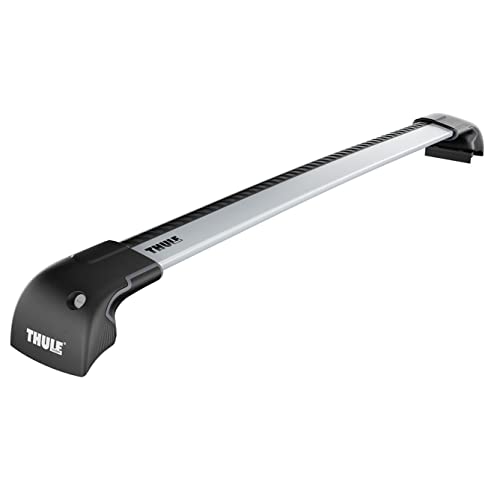
Flush roof rails and fixed mounting points get a bar built specifically for that clamp style, skipping raised-rail hardware entirely. Low-profile feet sit close to the roofline, trimming drag and visual bulk. Most SUVs and crossovers with integrated rails fit this system.
Pros
- Low-profile feet reduce drag on flush-rail vehicles
- Matches factory fixed points without extra drilling
- Shares Thule’s T-track accessory system
Cons
- Only fits vehicles with flush or fixed-point rails
- Not adjustable to raised-rail or bare-roof vehicles

Rhino-Rack Vortex 2500
Higher static load ratings make this a common pick for rooftop tents and bulky cargo boxes. An aerofoil profile keeps road noise down despite the added strength. Legs adjust to different vehicle widths using one leg design across the Rhino-Rack lineup.
Pros
- Higher static load rating suits rooftop tents specifically
- Aerofoil shape keeps noise low despite the added strength
- Adjustable legs cover a wide range of vehicle widths
Cons
- Bulkier bar profile than Thule or Yakima’s slimmest options
- Accessory range is less common in North American stores

ROLA Removable Mount Roof Rack
Quick-release clamps let the whole rack come off in minutes, leaving no hardware behind on raised factory rails. Drivers who only haul cargo a few times a year avoid extra wind noise the rest of the time. That convenience trades away some load capacity.
Pros
- Quick-release clamps allow full removal in minutes
- No permanent hardware left on the vehicle when removed
- Compatible with a wide range of universal accessories
Cons
- Square bar shape is noisier at highway speed than aero bars
- Lower load capacity than fixed aerodynamic systems

CURT Universal Crossbar Roof Rack
Adjustable clamps span a broader range of raised rail spacing, so no vehicle-specific fit kit is needed. That flexibility makes it simple to swap the rack between two vehicles in one household. Steel construction keeps the price under aluminum aero bars.
Pros
- Adjustable clamps fit a wider range of rail spacing without a fit kit
- Steel construction keeps pricing below aluminum aero bars
- Works well for households moving racks between two vehicles
Cons
- Steel bars add more weight than aluminum alternatives
- Wind noise is higher than aerodynamic bar shapes
How to pick the right one
What to check before buying a roof rack Roof type decides the mounting hardware: raised rails, flush rails, fixed points, and bare roofs each need a different clamp. Manufacturers list dynamic load capacity for driving, which sits lower than static capacity for parked loads like tents. Aero-shaped bars cost more upfront but cut wind noise and fuel drag on long highway stretches.
Raised rails vs flush rails vs bare roofs Raised rail vehicles have the most options, since clamp-style racks like the Malone Airflow2 or CURT crossbar skip vehicle-specific kits entirely. Flush rail and fixed-point cars need a bar built for that exact clamp style, like the Thule AeroBlade Edge. Bare roofs without rails narrow the field further, since only certain fit kits work at all.
Picking a rack for rooftop tents or heavy cargo Static load rating matters most for a parked tent, which is why the Rhino-Rack Vortex 2500 targets that use case specifically. Check the vehicle roof’s own weight rating too, since a strong rack means nothing if the roof itself can’t hold the load. Split cargo weight evenly across both bars instead of loading one side.
Weighing a removable rack against a fixed one Occasional haulers gain more from a quick-release system like ROLA’s, since it removes wind noise and drag during the months it sits unused. Daily haulers get better value from a fixed aerodynamic bar that stays optimized for constant use. Small vehicles used mostly for commuting rarely need a rack at all beyond seasonal trips.
Side by side
| # | Model | Bar shape | Best for | Score | Price |
|---|---|---|---|---|---|
| 1 | Thule WingBar Evo | Aerodynamic teardrop | Best overall | 9.3 | Check price |
| 2 | Yakima JetStream | Aerodynamic | Best value | 8.9 | Check price |
| 3 | Malone Airflow2 Roof Rack System | Aerodynamic | Best budget | 8.3 | Check price |
| 4 | Thule AeroBlade Edge | Aerodynamic, low-profile foot | Best for flush-rail vehicles | 8.8 | Check price |
| 5 | Rhino-Rack Vortex 2500 | Aerofoil | Best for rooftop tents | 9.0 | Check price |
| 6 | ROLA Removable Mount Roof Rack | Square, coated steel | Best for occasional use | 8.4 | Check price |
| 7 | CURT Universal Crossbar Roof Rack | Square steel | Best for multi-vehicle households | 8.5 | Check price |
Frequently asked questions
What is the difference between raised rail and flush rail roof racks?
Raised rail systems clamp onto elevated factory rails, while flush rail and fixed-point systems attach directly to points built into the roofline without raised bars.
Do adjustable roof racks fit multiple vehicles?
Some, like the CURT crossbar kit, adjust clamp width to fit a range of raised rail spacing, though most premium aero bars still need a vehicle-specific fit kit.
How much weight can a roof rack hold?
Dynamic load capacity while driving typically ranges from 130 to over 200 pounds depending on the system, with static parked capacity often higher.
Are aerodynamic roof racks worth the extra cost?
Aerodynamic bars reduce wind noise and drag at highway speed, which matters most for drivers doing regular long-distance trips with the rack installed.
Can I put a rooftop tent on any roof rack?
No, rooftop tents need a bar system with a high static load rating, like the Rhino-Rack Vortex 2500, and the vehicle roof itself must also support that weight.
Do roof racks damage a car’s paint or roof?
Properly installed racks using the correct fit kit for your vehicle should not damage paint, though loose or incorrect mounts can cause scratching over time.
Is a removable roof rack less sturdy than a fixed one?
Removable systems generally carry a slightly lower load rating than fixed aerodynamic bars, trading some capacity for the ability to detach quickly.
What roof rack works best for a cargo box?
Most cargo boxes clamp onto standard round, square, or aero-shaped bars, so compatibility depends more on the box’s own mounting hardware than the bar brand.
Which roof rack is quietest at highway speed?
Teardrop and aerofoil bar shapes, like Thule’s WingBar Evo or Rhino-Rack’s Vortex, cut wind noise noticeably compared to square steel bars.
Do I need a separate fit kit for a bare-roof vehicle?
Yes, bare roofs without rails or fixed points need a dedicated fit kit designed for that vehicle, and options narrow compared to raised-rail cars.
Our take
Thule WingBar Evo earns the overall recommendation for its quiet ride and broad accessory ecosystem. Shoppers on a tighter budget should look at the Malone Airflow2 instead, and anyone hauling a rooftop tent gets more usable capacity from Rhino-Rack’s Vortex 2500.
Tony Russo
Tony trained as an automotive technician and spent years in service and parts retail before moving into writing. He focuses on garage tools, car care products and accessories from a hands-on maintenance perspective.