8 Quart Aluminum Pans That Handle Big Batch Cooking
Winco ALHP-8 Heavy Duty Aluminum Sauce Pot leads on wall thickness, so long simmers stay off the scorch line. Vollrath Wear-Ever Aluminum Sauce Pot brings commercial gauge consistency and better balance. IMUSA USA Aluminum Stock Pot covers pasta, corn and blanching for very little.
Winco ALHP-8 Heavy Duty Aluminum Sauce Pot is the pick for most kitchens. Its extra metal spreads burner heat instead of driving it into a sauce. Vollrath Wear-Ever Aluminum Sauce Pot answers the same brief with tighter commercial tolerances. Boiling only? IMUSA USA Aluminum Stock Pot handles pasta water and blanching without fuss.
Aluminum moves heat roughly three times faster than stainless steel, which is why foodservice kitchens standardize on it. Trouble is, thin pressed pots share the metal but not the behavior. Gauge is the deciding number, and listings often bury it. Reactivity is the second variable, since bare aluminum discolors around tomatoes, wine and vinegar. We compared stated wall and base thickness, shipping weight as a gauge proxy, handle attachment, pot profile, and burner compatibility. Owner feedback pointed the same way: rivets and metal thickness predict long term satisfaction better than brand names do.
What we recommend

Winco ALHP-8 Heavy Duty Aluminum Sauce Pot
Winco splits its aluminum line into standard and heavy duty, and this pot sits in the thicker tier. That extra metal buys you a tomato reduction that does not catch on the base. Side handles are riveted through the wall rather than spot welded, and the wide sauce pot base covers a full size burner.
Pros
- Thick walls hold a low simmer without scorching
- Riveted handles survive years of daily lifting
- Wide base matches a full size burner ring
Cons
- Bare aluminum darkens around acidic foods
- Non magnetic base rules out induction

Vollrath Wear-Ever Aluminum Sauce Pot
Wear-Ever is the line restaurant kitchens buy by the shelf, and consistency is what it sells. Gauge stays even from rim to base, so a hard flame does not create hot spots. Handle placement is set for a loaded pot, which changes how a full 8 quarts feels coming off the range. A finished rim pours stock without running down the side.
Pros
- Even thickness avoids burner hot spots
- Balanced handles help when the pot is full
- Poured rim keeps stock off the cooktop
Cons
- Costs more than general foodservice brands
- Bare surface still reacts with vinegar and wine

Update International Aluminum Sauce Pot
Restaurant supply houses stock Update International for the pots nobody photographs. Gauge here lands above the thin import tier without reaching heavy duty weight. Rivets hold the side handles, and matching lids and larger sizes are easy to add later. Tooling marks show on the exterior, which changes nothing about how it cooks.
Pros
- Respectable metal thickness for the outlay
- Riveted rather than welded handle joints
- Matching sizes available for a full set
Cons
- Exterior finish shows tooling marks
- Thinner than the heavy duty sauce pots

Thunder Group Aluminum Stock Pot
Height is the point here. A tall narrow stock pot exposes less surface to the air, so a six hour stock loses far less water than it would in a wide pan. Pasta, corn and blanching baskets all suit the shape. Less base area sits over the flame, which makes it a poor choice for reducing a sauce.
Pros
- Narrow opening slows evaporation on long stocks
- Takes little width on a crowded cooktop
- Sensible outlay for volume cooking
Cons
- Small base area is wrong for reductions
- Base is thinner than heavy duty sauce pots

IMUSA USA Aluminum Stock Pot
IMUSA builds the light pots that live in most first kitchens. Thin walls bring water to a boil quickly, which is genuinely useful for pasta, corn and blanching. Same thinness turns a low simmer into a scorched base, so keep sauces out of it. Weight is low enough to drain one handed at the sink.
Pros
- Reaches a rolling boil faster than heavy pots
- Light enough to drain when full
- Lowest outlay of the seven
Cons
- Thin base scorches on low simmers
- Dents from a knock or a drop
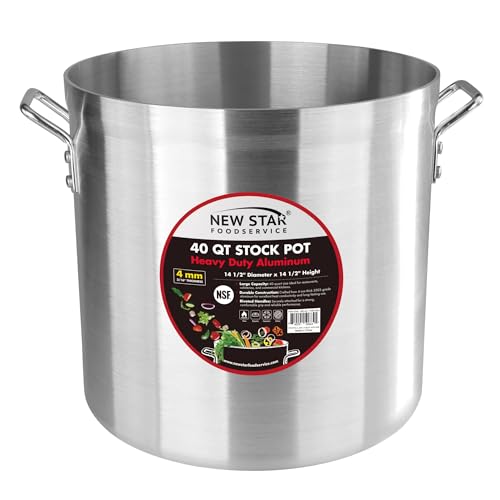
New Star Foodservice Aluminum Stock Pot
Catering work destroys pots. New Star answers with reinforced handles and a rim that survives stacking in a van. Propane burners run far hotter than any home range, and this build tolerates that output. Delicate sauce work is not its job, but tailgate cooking and outdoor fryer setups are.
Pros
- Rim and handles take rough transport
- Suits high output propane burners
- Durability is high for the outlay
Cons
- Too coarse for delicate sauce work
- Heavier than most domestic aluminum pots

Libertyware Aluminum Sauce Pot
Libertyware sells the plainest end of foodservice, and this pot has nothing to describe beyond metal, rivets and a rim. That is the appeal when your good pot already holds stock and you need somewhere to boil potatoes. Wall thickness sits below the heavy duty tier, so cook accordingly and keep the flame moderate.
Pros
- Full size capacity for a small outlay
- Light enough for one handed handling
- Useful backup when the main pot is busy
Cons
- Base is thinner than heavy duty rivals
- Darkens quickly with acidic foods
What to look for
What should you look for in an 8 quart aluminum pan? Gauge decides everything else. Aluminum conducts heat well, but that only turns into even cooking when there is enough metal to spread it sideways. Thin walls hand the burner ring straight to your food, which is why cheap pots scorch and heavy ones do not. Heavy duty lines from Winco and Vollrath feel obviously denser in the hand. When a listing skips the gauge number, compare shipping weights between same size pots, since heavier means thicker. After that, check the handles: rivets pass through the wall and last, welds eventually shear.
Sauce pot or stock pot: which shape do you need? Two shapes share the 8 quart label and they cook differently. A sauce pot runs wide and shallow, putting more base over the flame for reductions, browning aromatics and anything that needs evaporation. Stock pots go tall and narrow, which slows evaporation across a long simmer and frees width on a crowded cooktop. Pasta, corn and blanching favor the tall shape. Reaching in with a whisk favors the wide one, which also washes more easily. Buy for whichever job you do weekly, not the one you do at Thanksgiving.
Which aluminum pans handle tomato sauce and other acidic foods? Bare aluminum reacts with tomatoes, wine, citrus and vinegar. Interiors dull, and a long cooked sauce can pick up a faint metallic note. Levels involved are not a health concern, but flavor and appearance suffer. Anodized aluminum carries a hardened non reactive layer that stops the reaction and shrugs off scratches, at a higher cost. Stock, pasta water and blanching never trigger the issue, so bare metal is fine there. For a pot that lives under marinara, choose anodized or a stainless lined pan instead.
Can you use aluminum pots on induction, and how do you clean them? Aluminum is not magnetic, so an induction hob ignores it unless the base carries a bonded steel disc. Most commercial pots skip that disc. Stick a refrigerator magnet on the base before you buy. Riveted handles conduct heat readily, so keep a dry towel within reach on gas. Skip the dishwasher entirely, because alkaline detergent pits and dulls the surface within a few cycles. Burnt residue lifts with a simmer of water and a couple of tablespoons of cream of tartar, followed by a nylon pad rather than steel wool.
Compared at a glance
| # | Model | Capacity | Best for | Score | Price |
|---|---|---|---|---|---|
| 1 | Winco ALHP-8 Heavy Duty Aluminum Sauce Pot | 8 quart | Best overall | 9.4 | Check price |
| 2 | Vollrath Wear-Ever Aluminum Sauce Pot | 8 quart | Best professional grade | 9.2 | Check price |
| 3 | Update International Aluminum Sauce Pot | 8 quart | Best value | 9.0 | Check price |
| 4 | Thunder Group Aluminum Stock Pot | 8 quart | Best for boiling and blanching | 8.8 | Check price |
| 5 | IMUSA USA Aluminum Stock Pot | 8 quart | Best budget | 8.6 | Check price |
| 6 | New Star Foodservice Aluminum Stock Pot | 8 quart | Best for outdoor burners | 8.3 | Check price |
| 7 | Libertyware Aluminum Sauce Pot | 8 quart | Best second pot | 8.0 | Check price |
Questions worth asking
Is an 8 quart pot big enough for making stock?
For a home batch, yes. One chicken carcass plus mirepoix and water fits comfortably and yields several quarts. Turkey carcasses and freezer batch cooking want 12 quarts or more. Eight quarts also happens to be a practical pasta size for four to six people.
Is aluminum cookware safe to cook in?
Normal cooking transfers trace amounts well inside accepted limits, which is why professional kitchens still use it daily. Anodized surfaces reduce transfer further. Real drawback of bare aluminum is cosmetic and about flavor with acidic dishes, not toxicity.
Can I use an aluminum pan on an induction cooktop?
Only if the base has a bonded magnetic steel disc, and most foodservice pots do not. Test with a refrigerator magnet before buying. Induction interface disks exist, though they waste energy and slow heating noticeably.
Why did my aluminum pot turn dark inside?
Acidic or alkaline contents oxidize the surface, and dishwasher detergent does it fastest. Result is cosmetic. Simmer water with two tablespoons of cream of tartar or a sliced lemon for about fifteen minutes to lighten it again.
Are aluminum pans dishwasher safe?
No. Alkaline detergents dull, pit and discolor bare aluminum within a handful of cycles. Hand wash with warm soapy water and a nylon pad. Anodized surfaces cope better, though most manufacturers still advise against machine washing.
What is the difference between anodized and bare aluminum?
Anodizing runs an electrochemical process that hardens the outer layer, leaving it non reactive and far more scratch resistant. Heat conduction stays the same. Bare metal costs less but marks and reacts with acids, so anodized wins for tomato based cooking.
How do you clean burnt food off an aluminum pot?
Fill with water, add cream of tartar or lemon juice, then simmer fifteen minutes to loosen the crust. Follow with a nylon scourer. Steel wool and oven cleaner scratch the surface and make the next batch stick worse.
Aluminum vs stainless steel: which is better for a stock pot?
Aluminum conducts heat better, weighs less when full, and costs less at a given thickness. Stainless resists acids and abuse but needs a clad base to spread heat evenly. For stock and boiling, aluminum wins on practicality, which explains its dominance in restaurant kitchens.
How thick should the walls of an aluminum stock pot be?
Heavy duty foodservice pots typically run around one eighth of an inch, while budget pots come in well under half of that. Thicker walls resist warping over a hot burner. If the spec sheet is silent, compare listed weights across the same capacity.
Do aluminum pots work over a campfire or outdoor propane burner?
They do, and their light weight is an advantage when packing. Direct flame will blacken the exterior permanently. Reinforced models such as the New Star pot cope with the higher output of propane rings better than thin domestic pots.
Our pick
Winco ALHP-8 Heavy Duty Aluminum Sauce Pot earns the top slot on metal thickness alone, since that is what keeps a long reduction off the base. Cooks who want commercial tolerances and better balance under load should step across to Vollrath Wear-Ever Aluminum Sauce Pot. If the pot exists purely for pasta water and blanching, IMUSA USA Aluminum Stock Pot does that job and stores easily.
Dana Whitfield
Dana spent eight years buying and merchandising for a regional kitchenware retailer before moving into editorial work. She has handled thousands of SKUs across cookware, small appliances and kitchen organization, and focuses on the practical differences that matter once a product is actually in daily use.