7 Butcher Block Boards Built for Daily Chopping
John Boos Block CHY-AB takes first place on thick edge grain cherry construction and enough mass to stay put under a knife. Sonder Los Angeles builds its walnut board for carving and serving in one piece. Ironwood Gourmet Charleston uses end grain acacia, the gentlest surface on blade edges.
John Boos Block CHY-AB leads for daily prep, thanks to edge grain cherry and a slab heavy enough to ignore a cleaver. Sonder Los Angeles wins on looks with black walnut and a deep carving groove. Ironwood Gourmet Charleston protects knife edges best with end grain acacia.
Two boards can look identical online and behave completely differently in a kitchen. Grain direction, glue joint quality, and thickness drive whether a board cups, splits, or lasts thirty years. Our ranking draws on published construction details, wood species hardness, stated dimensions, and owner reports about warping and oiling routines.
The top picks, ranked

John Boos Block CHY-AB Reversible Cherry Cutting Board
Cherry strips glued on edge give this board a tight, void-free surface that resists scoring from a chef’s knife. Mass does the rest, since the slab is heavy enough to stay put without a mat. Flip it to keep one face for bread and produce and the other for raw prep.
Pros
- Weight keeps it planted while chopping
- Two working faces separate raw and cooked
- Cherry darkens evenly rather than blotching
Cons
- Heavy to lift into a sink
- Dries out fast without monthly oiling

Sonder Los Angeles Walnut Butcher Block Cutting Board
Black walnut gives this board a dark chocolate tone that carries straight from the counter to the table. One face carries a deep juice groove sized for a roast; the other stays flat for everyday chopping. Construction is edge grain, so treat it as a prep surface rather than a chopping block.
Pros
- Dark walnut suits table service
- Groove holds carving juices off the counter
- Flat reverse face keeps full working area
Cons
- Pale knife marks show against dark wood
- Costs more than maple of the same size

Ironwood Gourmet Charleston End Grain Chef’s Board
Fibers stand vertically in end grain construction, so a blade parts them and they close behind it. Knives hold their edge longer and cut marks fade instead of accumulating. Acacia supplies the density, which resists deep scoring better than softer end grain woods.
Pros
- Kindest construction to blade edges
- Cut marks close rather than collect
- Dense acacia resists gouging
Cons
- Splits if allowed to dry out
- Thicker and heavier than edge grain boards

Teakhaus by Proteak Edge Grain Carving Board
Natural oils inside teak repel water, which is why boatbuilders use it and why this board needs oiling less often than maple or cherry. Proteak sources the timber from managed plantations. A deep groove runs the perimeter, catching liquid from a carved roast rather than sending it across the counter.
Pros
- Natural oils slow moisture absorption
- Longest interval between oilings here
- Groove depth handles a full roast
Cons
- Silica in teak dulls blades faster
- Surface feels slick when new
Virginia Boys Kitchens Walnut Cutting Board
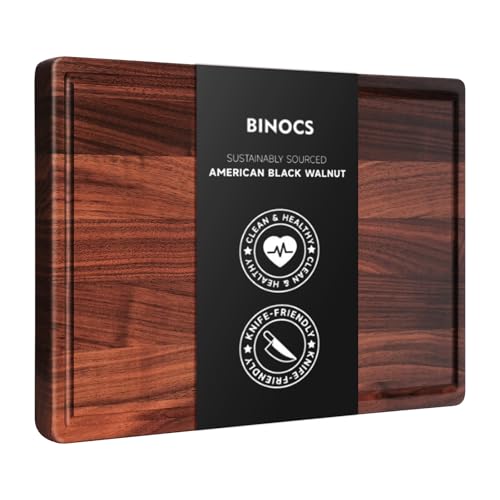
American black walnut at a moderate thickness keeps this board affordable and liftable at the same time. Handle cutouts sit at each end, which turns carrying a wet board into a two-handed grip rather than a fumble. Kiln-dried stock and a juice groove complete the package.
Pros
- Genuine walnut without premium pricing
- Cutouts make washing far safer
- Light enough for one-handed carrying
Cons
- Thinner than a true butcher block
- Cups more readily if left wet on one side

Catskill Craftsmen Reversible Cutting Board
Northern hard maple is the traditional butcher block species, and Catskill Craftsmen mills it in New York at a fraction of premium brand cost. Both faces work, giving two surfaces before any sanding is needed. Boards arrive unfinished, so plan on a light sand and a thorough oiling before first use.
Pros
- Hard maple density at a low outlay
- Reversible faces double the usable life
- Pale surface shows food clearly
Cons
- Needs sanding and oiling out of the box
- Beet and turmeric stains show on light maple

JK Adams Maple Reversible Carving Board
Sized to fit a standard draining board, this Vermont maple piece solves the problem nobody mentions until washing day. One face carries a juice groove; flip it for a clean flat surface. Weight stays low enough to move with one hand, which is why it lives in cupboards rather than on counters.
Pros
- Washes in a domestic sink without wrestling
- Stores upright in a cupboard
- Groove and flat faces in one board
Cons
- Smaller working area than full blocks
- Slides without a damp cloth underneath
What matters most
What to look for in a butcher block board Start with four details: grain construction, wood species, slab thickness, and whether a juice groove earns its space. Grain sets knife friendliness. Species sets hardness and stain resistance. Thickness sets stability and weight. Grooves help with roasts and hinder with vegetables, which is why reversible boards remain the popular compromise.
Edge grain vs end grain: which is kinder to knives? Edge grain boards use strips laid on their sides, producing a stable and affordable surface for daily prep. End grain boards stand the fibers upright, so a blade slips between them and the fibers close again. That self-healing action keeps edges sharp longer. End grain costs more and reacts faster to humidity swings, so it needs stricter oiling. Face grain boards score deeply and belong on the table.
Which butcher block size suits a small kitchen? Measure your sink before your counter. A full slab that will not fit under a tap ends up wiped rather than washed. Boards around the size of the JK Adams maple carve, chop, and still fit a drying rack. Thick heavy blocks like the John Boos are worth it only when the board lives permanently on the counter.
How to oil and store a board so it never cracks Wash by hand in warm soapy water straight after use, then dry both faces with a towel. Never soak a board and never put it in a dishwasher, since heat and prolonged moisture open glue joints. Store on edge so air reaches both faces evenly. Flood the surface with food-grade mineral oil monthly, leave it overnight, and wipe off what has not soaked in.
How they stack up
| # | Model | Construction | Best for | Score | Price |
|---|---|---|---|---|---|
| 1 | John Boos Block CHY-AB Reversible Cherry Cutting Board | Edge grain, reversible | Best overall | 9.4 | Check price |
| 2 | Sonder Los Angeles Walnut Butcher Block Cutting Board | Edge grain, reversible | Best for carving and serving | 9.2 | Check price |
| 3 | Ironwood Gourmet Charleston End Grain Chef’s Board | End grain | Best for knife edges | 9.0 | Check price |
| 4 | Teakhaus by Proteak Edge Grain Carving Board | Edge grain | Best for low maintenance | 8.8 | Check price |
| 5 | Virginia Boys Kitchens Walnut Cutting Board | Edge grain | Best value hardwood | 8.6 | Check price |
| 6 | Catskill Craftsmen Reversible Cutting Board | Edge grain, reversible | Best budget | 8.3 | Check price |
| 7 | JK Adams Maple Reversible Carving Board | Edge grain, reversible | Best for small kitchens | 8.0 | Check price |
Good to know
What is the difference between edge grain and end grain?
Edge grain uses strips laid on their sides for a stable, affordable surface. End grain stands fibers vertically, so knives slip between them instead of cutting across. End grain preserves edges better and hides marks, but costs more and reacts faster to humidity changes.
Which wood is best for a butcher block?
Hard maple is the traditional pick for density and value. Walnut hides knife marks and looks best on a table. Cherry darkens attractively over years. Teak needs the least oiling thanks to natural oils. Acacia offers hardness at moderate cost. All are closed-grain hardwoods, which is what matters for hygiene.
Can butcher block boards go in the dishwasher?
No. Sustained heat and water separate the glue joints and warp the slab, usually permanently. Wash by hand, rinse quickly, dry both faces with a towel, and stand the board on edge so air circulates around it.
How often should I oil a wooden cutting board?
Monthly suits most boards, weekly for the first month and for boards used daily. Food-grade mineral oil is standard because it never turns rancid. Apply generously, leave it overnight, then wipe the excess. A beeswax cream on top slows moisture loss further.
Are wood boards safe for raw meat?
Closed-grain hardwoods perform well against bacteria, and professional kitchens use them widely. Practical habits matter more than material: wash immediately in hot soapy water, dry properly, and dedicate one face of a reversible board to raw ingredients.
Why did my butcher block warp or crack?
Moisture imbalance causes nearly all failures. Soaking, dishwashing, leaving one face wet, or skipping oil for months all do it. Wash quickly, dry both faces, store upright, and oil on a schedule. End grain boards need the most attention because their fibers drink water fastest.
Is a juice groove worth having?
Yes if you carve roasts or slice tomatoes and melon regularly, since the channel catches liquid before it reaches the counter. It removes usable area from the surface, so reversible boards with a groove on one face and a flat second face solve the trade cleanly.
How do I remove stains and smells from a board?
Scrub with coarse salt and a cut lemon, wait a few minutes, then rinse and dry. Baking soda paste lifts most colored stains. Deep marks sand out with fine grit paper, after which a full oiling restores the surface. Plastic boards offer no equivalent recovery.
Does teak dull knives faster than maple?
Slightly. Teak contains silica, the same mineral content that makes it weather resistant, and silica is abrasive against a thin edge. Owners who sharpen regularly rarely notice. Anyone protecting an expensive Japanese blade should choose end grain acacia or maple instead.
Final word
John Boos Block CHY-AB earns the counter space, since thick edge grain cherry handles daily prep and stays flat for years on basic oiling. Choose the Sonder Los Angeles walnut board when the same piece has to carve a roast and reach the table. Ironwood Gourmet Charleston justifies its extra care if keeping knives sharp outranks convenience.
Dana Whitfield
Dana spent eight years buying and merchandising for a regional kitchenware retailer before moving into editorial work. She has handled thousands of SKUs across cookware, small appliances and kitchen organization, and focuses on the practical differences that matter once a product is actually in daily use.