Cast Iron vs Stainless: Picking a 12 Inch Skillet
Lodge 12 Inch Cast Iron Skillet takes the overall win on heat retention and searing power. All-Clad D3 Stainless 12 Inch Fry Pan responds faster and builds fond for pan sauces. For eggs, fish and pancakes, Tramontina Professional Nonstick delivers the strongest release for the least outlay.
Lodge 12 Inch Cast Iron Skillet remains the sensible default, holding enough heat for a hard steak crust and lasting decades with basic care. Faster response and easier cleaning point toward the All-Clad D3 stainless fry pan, which also builds the fond a pan sauce needs. Eggs, fish and crepes belong in the Tramontina Professional nonstick. Want one pan attempting all three jobs? HexClad is the hybrid worth considering.
Skillet advice conflicts because people answer different questions with the same word. Cast iron banks heat but responds slowly and weighs a lot. Stainless browns evenly and deglazes beautifully, yet sticks without proper preheating. Nonstick makes eggs effortless while behaving as a consumable with a real temperature ceiling. We compared construction and cladding, heat retention against responsiveness, stated oven ceilings, handle materials, induction ratings and warranty terms, alongside owner reports on coating life and warping.
How to pick the right one
Which 12 inch skillet material fits the cooking you do? Match the pan to your weeknight reality, not an aspiration. Cast iron banks heat and delivers the hardest crust, making it right for steak, cornbread and anything finishing in the oven. Clad stainless reacts quickly, browns evenly and leaves the fond a pan sauce needs. Nonstick exists for eggs, fish, crepes and delicate proteins. Most kitchens settle on two of the three, and that combination usually beats one pan attempting everything.
How much do weight and handle design matter at this size? A 12 inch pan full of food gets heavy fast, and cast iron adds several pounds before ingredients go in. Long stainless handles stay cool over a burner but reach oven temperature quickly, so keep mitts nearby. Silicone sleeves feel comfortable while capping the oven ceiling. Bare cast iron handles are hot every time, without exception. A helper handle opposite the main one changes how safely you can move a loaded pan.
Which 12 inch skillets work on induction and in the oven? Two numbers decide compatibility. Induction requires a magnetic base, which cast iron and clad stainless have, while plain aluminum does not unless a steel disc is bonded on. Tramontina’s standard aluminum pan is the example to watch for here. Oven ceilings range from around 400 F on basic nonstick to essentially unlimited on bare cast iron, and handle material usually sets the limit rather than the cooking surface.
How do you make a 12 inch skillet last? Coatings die from high heat, metal utensils and dishwasher detergent, so keep them at medium, use wood or silicone, and wash by hand. Stainless needs a proper preheat before the fat goes in, which is the actual fix for sticking. Cast iron wants immediate drying and a thin wipe of oil, never an overnight soak. Pick the pan whose care routine you will genuinely follow rather than the one you admire.
Our top picks
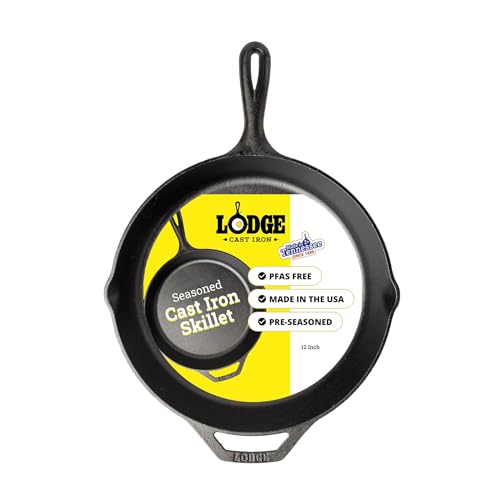
Lodge 12 Inch Cast Iron Skillet
Thick cast iron arrives pre seasoned with vegetable oil and stores more heat than anything else here, which is precisely what a thick steak crust demands. Cooktop, oven, grill and campfire are all fair game, and the seasoning layer improves with every fatty cook. Weight is the trade, and the handle needs a cloth or mitt every single time.
Pros
- Stores the most heat for searing meat
- Lasts a lifetime with basic drying and oiling
- Works on gas, electric, induction and open fire
Cons
- Awkward to lift and tilt when loaded
- Needs drying immediately and occasional re seasoning

All-Clad D3 Stainless 12 Inch Fry Pan
Three bonded plies wrap an aluminum core through the base and up the walls, so heat spreads without hot spots at the rim. Stainless surfaces develop fond, giving pan sauces a base that no coating can produce. Riveted handles stay cool on a burner, and the pan carries a limited lifetime warranty.
Pros
- Even heating right to the pan walls
- Builds fond for deglazing and pan sauces
- Backed by a limited lifetime warranty
Cons
- Sticks unless preheated properly before fat goes in
- Most expensive pan in this roundup
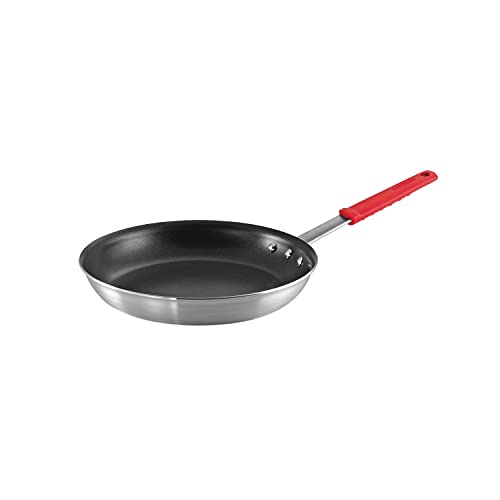
Tramontina Professional Nonstick 12 Inch Fry Pan
Restaurant kitchens use this pan for a reason: heavy gauge aluminum resists warping, and the commercial nonstick releases eggs and fish without oil pooling. A riveted silicone handle stays comfortable through long service. Plain aluminum has no magnetic base, so the standard version skips induction cooktops entirely.
Pros
- Clean release for eggs, fish and pancakes
- Thick body stays flat under high heat
- Silicone handle stays cool on the burner
Cons
- Standard version will not work on induction
- Coating wears out and needs replacing eventually

HexClad 12 Inch Hybrid Frying Pan
Laser etching raises a hexagonal grid of stainless steel above the nonstick valleys, so metal touches food while the coating handles release. Metal utensils cause less damage here than on a sprayed pan. Searing falls short of cast iron and release falls short of pure nonstick, which is the nature of any compromise.
Pros
- Sears and releases without swapping pans
- Survives metal utensils better than plain nonstick
- High oven ceiling for a coated pan
Cons
- Beaten by dedicated stainless and nonstick at each job
- Priced above most coated pans

Ninja Foodi NeverStick Premium 12 Inch Fry Pan
Plasma ceramic particles are fused to the surface at high temperature rather than sprayed on, a process aimed at the chipping and flaking that kills most coated pans. Heat tolerance runs above typical nonstick, and the oven ceiling reaches roughly 500 F. Hard anodized aluminum makes it heavier than a basic pan.
Pros
- Coating built to resist chipping and flaking
- Handles higher heat than sprayed nonstick
- Balanced feel despite the thick body
Cons
- Heavier than budget nonstick pans
- Still a coating, so it will not outlive cast iron

T-fal Ultimate Hard Anodized Nonstick 12 Inch Fry Pan
A Thermo-Spot ring in the center turns solid red at cooking temperature, which fixes the most common home cooking error of adding food to a cold pan. Titanium reinforced nonstick releases well and stands up to daily eggs. Hard anodized aluminum keeps it light, and the oven ceiling sits around 400 F.
Pros
- Heat indicator removes preheating guesswork
- Light enough to shake and flip one handed
- Easy to replace when the coating tires
Cons
- Lowest oven ceiling in this group
- Coating life is shorter than fused ceramic options

GreenPan Valencia Pro 12 Inch Frying Pan
Thermolon ceramic sits over hard anodized aluminum, made without PFAS, PFOA, lead or cadmium for cooks avoiding traditional coating chemistry. Release is excellent when new, and the pan takes roughly 600 F in the oven. Ceramic slickness fades sooner than the best conventional nonstick, so keep the burner at medium.
Pros
- Skips traditional nonstick chemistry entirely
- Highest oven ceiling of the coated pans here
- Clean finish that suits serving at the table
Cons
- Slickness fades faster than premium nonstick
- Wants low to medium heat to protect the ceramic
How they stack up
| # | Model | Material | Best for | Score | Price |
|---|---|---|---|---|---|
| 1 | Lodge 12 Inch Cast Iron Skillet | Cast iron, pre seasoned | Best overall | 9.4 | Check price |
| 2 | All-Clad D3 Stainless 12 Inch Fry Pan | Three ply bonded stainless, aluminum core | Best stainless | 9.2 | Check price |
| 3 | Tramontina Professional Nonstick 12 Inch Fry Pan | Heavy gauge aluminum | Best value nonstick | 9.0 | Check price |
| 4 | HexClad 12 Inch Hybrid Frying Pan | Tri ply with etched stainless hex pattern | Best hybrid | 8.8 | Check price |
| 5 | Ninja Foodi NeverStick Premium 12 Inch Fry Pan | Hard anodized aluminum | Best durable nonstick | 8.6 | Check price |
| 6 | T-fal Ultimate Hard Anodized Nonstick 12 Inch Fry Pan | Hard anodized aluminum | Best budget nonstick | 8.3 | Check price |
| 7 | GreenPan Valencia Pro 12 Inch Frying Pan | Hard anodized aluminum | Best ceramic coating | 8.0 | Check price |
Frequently asked questions
Is a 12 inch skillet too big for everyday cooking?
For a family it is the most useful single size, browning food without crowding while still handling one portion. Weight and cooktop overhang are the trade offs. Cooking mostly for one? A 10 inch pan is easier to live with day to day.
Cast iron vs stainless steel: which skillet should you buy first?
Cast iron if searing and oven finishing dominate your cooking, since it holds heat and lasts indefinitely. Stainless if you want fast temperature changes, even browning and pan sauces. Cast iron asks less outlay but more upkeep, while stainless cleans up easily and weighs much less.
How long does a nonstick skillet last?
A few years with careful use, considerably less with high heat, metal utensils or dishwasher cycles. Nonstick is consumable rather than heirloom, which is why a mid range pan such as the Tramontina Professional often makes more sense than a premium one.
Can you use metal utensils in a 12 inch skillet?
Freely in cast iron and stainless. Avoid them in conventional nonstick, where scratches shorten coating life quickly. HexClad’s raised stainless grid and Ninja’s fused ceramic particles handle metal better, though wood and silicone remain gentler on any coating.
What oven temperature can a 12 inch skillet handle?
Bare cast iron takes any home oven temperature. Clad stainless such as the All-Clad D3 is rated around 600 F. Coated pans range from roughly 400 F on the T-fal to around 500 F on HexClad and Ninja. Check the maker’s stated limit, since handles often cap it.
Which skillets work on an induction cooktop?
Cast iron and clad stainless work everywhere, including induction. Plain aluminum nonstick does not unless a magnetic base is bonded to it, and many brands sell both variants under one name. Confirm the specific listing rather than assuming the whole line is rated.
How do you stop food sticking to a stainless skillet?
Preheat the empty pan over medium until a water droplet beads and skitters, then add fat, then food. Let proteins release on their own instead of forcing them, since a crust loosens naturally. Almost all sticking traces back to an under heated pan.
Do you need to season a pre seasoned cast iron skillet?
Not before first use. Seasoning builds with cooking, especially with bacon, oil heavy searing and shallow frying. Dry it thoroughly after washing, wipe a very thin film of oil on while warm, and keep it out of standing water.
What is the best 12 inch skillet for eggs?
Tramontina Professional Nonstick for value, or the GreenPan Valencia Pro if you prefer ceramic without PFAS. Both release egg whites cleanly with minimal fat. Keep the burner at medium either way, since high heat degrades both types of coating.
The verdict
Lodge 12 Inch Cast Iron Skillet delivers searing performance that other materials charge far more for, and it will outlast every other pan here. All-Clad D3 is the better daily driver when responsiveness and pan sauces matter more than raw heat retention. Add the Tramontina Professional nonstick for eggs and fish, and two pans cover nearly everything a home kitchen asks of a skillet.
Dana Whitfield
Dana spent eight years buying and merchandising for a regional kitchenware retailer before moving into editorial work. She has handled thousands of SKUs across cookware, small appliances and kitchen organization, and focuses on the practical differences that matter once a product is actually in daily use.


