12 Cup Percolators for a Bolder Morning Pot
For a stainless build and a well judged perk cycle, the Farberware FCP412 leads. Value hunters get the Presto 02811, whose detachable cord carries to the table. Newcomers appreciate the clearer indicators on the Cuisinart PRC-12.
The Farberware FCP412 leads because a fully stainless interior meets a perk cycle that stops before boiling the flavour out. Watching cost? The Presto 02811 matches most of it, and its cord unplugs for serving. First time percolator users get clearer feedback from the Cuisinart PRC-12.
A percolator cup measures a small five to six ounce serving, not a mug, so a 12 cup pot makes about six mugs. Bare metal interiors, loose baskets and weak keep warm elements all reach the cup. We ranked these on interior material, perk behaviour, basket design, cord type and cleaning, weighed against owner reports on grounds and longevity.
The best picks, ranked
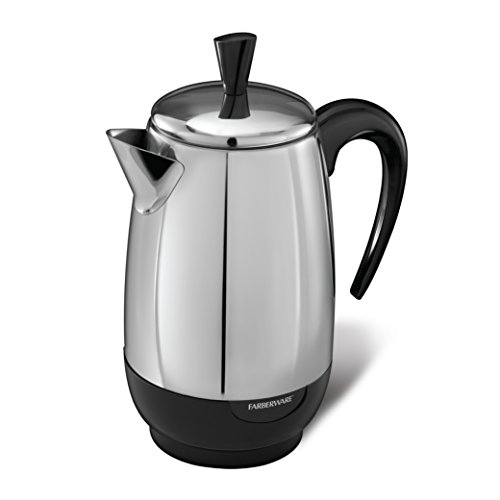
Farberware FCP412 12-Cup Percolator
Generations of Farberware experience show in a fully stainless interior that adds no metallic edge and a basket that seats firmly on the stem. The cycle finishes perking and drops to keep warm without overcooking. Owners keep this one running through years of daily use.
Pros
- Fully stainless interior with no coating to fail
- Reliable automatic switch to keep warm
- Detachable cord for serving at the table
Cons
- Handle warms during long keep warm periods
- Basket needs careful seating to avoid grounds

Presto 02811 12-Cup Stainless Steel Coffee Maker
Presto strips it to essentials: stainless construction, a signal light and a cord that unplugs so the pot goes straight to the table. Brewing runs quick for the capacity, and keep warm holds temperature without scorching. Plainer looks are part of why it costs less.
Pros
- Strong value for a stainless pot
- Quick brew time for the capacity
- Ready light removes the guesswork
Cons
- Plain styling
- Lid fit is less positive than premium models
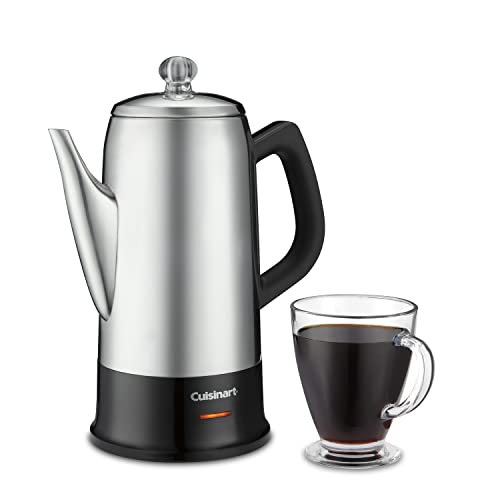
Cuisinart PRC-12 Classic 12-Cup Percolator
Coming from a drip machine? Clearer indicators and a comfortable handle ease the switch on this classic mechanism. Brew strength lands well and the stainless body wipes clean. Its price sits above the basic pots without changing much in the cup.
Pros
- Clear indicators for first time percolator users
- Comfortable, well balanced handle
- Stainless body cleans easily
Cons
- Costs more than equally capable basic pots
- Keep warm runs on the hot side
Hamilton Beach 40614R 12-Cup Electric Percolator
Serving a crowd guides this design, with a cool touch handle, a drip free spout and a keep warm cycle meant to run a while. A church hall or family breakfast where the pot sits out suits it well. Build is lighter than the heavier stainless pots here.
Pros
- Handle stays cool during long serving
- Spout pours cleanly without dribbles
- Keep warm designed for longer periods
Cons
- Lighter build than heavy stainless rivals
- Basket parts feel less substantial

Farberware Yosemite Stovetop Percolator
You decide when to pull it off the heat, so control over the perk is total, and it brews through a power cut or on a camp stove. A glass knob shows the perk colour as it darkens. Walk away and it over extracts into bitterness, so it wants attention.
Pros
- Full control over brew strength
- Works without mains power
- No electronics to fail over time
Cons
- Needs watching throughout the perk
- Not suited to all induction hobs

GSI Outdoors Glacier Stainless Percolator
Campsites and cabins shape this rugged stainless body, and a silicone handle stays usable over a fire ring. The basket and stem clean with a splash of water and a wipe. Capacity shifts across the model range, so confirm the size before ordering for a group.
Pros
- Built for outdoor abuse
- Cleans with minimal water
- Works over a campfire or camp stove
Cons
- Capacity varies across the model range
- Heavier to pack than aluminium camp pots

COLETTI Bozeman Camping Coffee Pot
An enamel finish gives this traditional pot a look that fits a cabin kitchen or a camp table. The basket is stainless and assembly involves nothing that breaks easily. Enamel chips under a hard knock, so it favours careful use over a truck bed.
Pros
- Traditional look for cabins and campsites
- Simple assembly with few parts
- Inexpensive for a stovetop percolator
Cons
- Enamel chips if knocked
- No indicator, so timing is by eye
The lineup, side by side
| # | Model | Capacity | Best for | Score | Price |
|---|---|---|---|---|---|
| 1 | Farberware FCP412 12-Cup Percolator | 12 cups | Best overall | 9.4 | Check price |
| 2 | Presto 02811 12-Cup Stainless Steel Coffee Maker | 12 cups | Best value | 9.2 | Check price |
| 3 | Cuisinart PRC-12 Classic 12-Cup Percolator | 12 cups | Best for percolator beginners | 9.0 | Check price |
| 4 | Hamilton Beach 40614R 12-Cup Electric Percolator | 12 cups | Best for gatherings | 8.8 | Check price |
| 5 | Farberware Yosemite Stovetop Percolator | 12 cups | Best stovetop option | 8.6 | Check price |
| 6 | GSI Outdoors Glacier Stainless Percolator | Camping and cabin | Best for camping | 8.3 | Check price |
| 7 | COLETTI Bozeman Camping Coffee Pot | Enamel finish classic pot | Best budget stovetop | 8.0 | Check price |
How to choose
What should you look for in a 12 cup percolator? Interior material sets the taste, since hot water passes over bare metal for minutes. Cycle behaviour decides whether the pot overcooks or holds steady. Cord type and cleaning access shape daily life with it. Weigh those four together, and the difference between a pot that lasts years and one that fades a season becomes obvious.
How many mugs does 12 cups really pour? Coffee makers rate capacity by a five to six ounce cup, so a 12 cup percolator yields roughly six mugs, not twelve. Filled far below its minimum, a percolator brews poorly, because the pump tube needs enough water to circulate. Two people drinking two mugs each fit this size well. Want a single mug? This is the wrong appliance.
Which grind size works best in a percolator? Percolators recirculate water through the grounds again and again, so a fine drip grind over extracts into bitterness and slips through the basket. Use a coarse grind, close to French press. Sediment in the cup almost always means the grind is too fine before the basket takes any blame.
Stainless, aluminium or enamel for the interior? Stainless is the safe default, adding nothing to the taste and surviving daily cleaning. Aluminium heats fast and costs less, though many drinkers catch a metallic edge, especially in older pots. Enamel over steel looks the part on a camp table and cleans easily, but a chip exposes the steel and rust follows.
Questions worth asking
How much coffee does a 12 cup percolator actually make?
Around 60 to 72 ounces, on the standard five to six ounce cup measure that coffee makers use. In mug terms that is roughly six servings. Judge capacity by ounces rather than the cup number on the box.
What grind should you use in a percolator?
Coarse, close to a French press grind. Fine grounds slip through the basket holes into the pot and over extract during the repeated cycling, which turns the coffee bitter and leaves sediment at the bottom of the cup.
How long does a percolator take to brew?
Usually seven to ten minutes for a full pot, depending on capacity and heat source. Electric models stop themselves. Stovetop pots need watching, and the usual guidance is to drop the heat once perking starts, then continue a few minutes to taste.
Is percolator coffee stronger than drip coffee?
It reads bolder, because the water passes through the grounds several times and extracts more. Whether that lands as strong or bitter comes down to grind size and how long you let it perk.
Can you use paper filters in a percolator?
Yes, and many people do. A disc filter in the basket catches fines and cuts sediment noticeably. It trims a little body too, which is part of what percolator drinkers enjoy, so it comes down to preference.
Why does my percolator coffee taste bitter?
Most often the grind is too fine or the perk ran too long, and both over extract. Coffee oil residue in the basket, stem or interior is the next likeliest cause, so clean everything thoroughly before adjusting the recipe.
Are stovetop or electric percolators better?
Electric models are more convenient and stop at the right point on their own. Stovetop models give full control, work without power and hold nothing electronic to fail. Pick electric for daily kitchen use and stovetop for camping, cabins or a backup.
How do you clean a percolator properly?
Wash the basket, stem and lid after every use, since coffee oils cling to them. Periodically fill the pot with a diluted white vinegar solution, run a cycle, then run two cycles of plain water. Never immerse the electrical base of an electric percolator.
Can you make tea or hot water in a percolator?
You can heat water in it, though brewing tea leaves oils and flavour behind that later coffee picks up. Keep a percolator to coffee if you care about taste, and heat plain water in it only in a pinch, then clean it well afterward.
The verdict
For daily use, buy the Farberware FCP412, since a fully stainless interior and a well judged perk cycle turn out consistent coffee for years. The Presto 02811 does nearly the same job for less if plainer styling suits you. For camping, cabins or power cuts, take the Farberware Yosemite Stovetop Percolator and keep control of the perk yourself.
Dana Whitfield
Dana spent eight years buying and merchandising for a regional kitchenware retailer before moving into editorial work. She has handled thousands of SKUs across cookware, small appliances and kitchen organization, and focuses on the practical differences that matter once a product is actually in daily use.


